menu

Best Time to Visit France in 2026: Month-by-Month Guide

Written by
Darya Solonets
Darya SolonetsMarketing Director, Flyer Club
linkedinLinkedIn

Develops brand communications, content strategy, and marketing initiatives for Flyer Club.

Reviewed by
Nick Bakin
Nick BakinFounder
linkedinLinkedIn

Leads Flyer Club's vision, strategic direction, and long-term growth.

0Published:
Summarize with AI
ChatGPT iconChatGPTClaude iconClaudeGrok iconGrokPerplexity iconPerplexity

Best time to visit France for US travelers in 2026 — month-by-month weather, crowds and prices for Paris, Provence, the Riviera and the Alps.

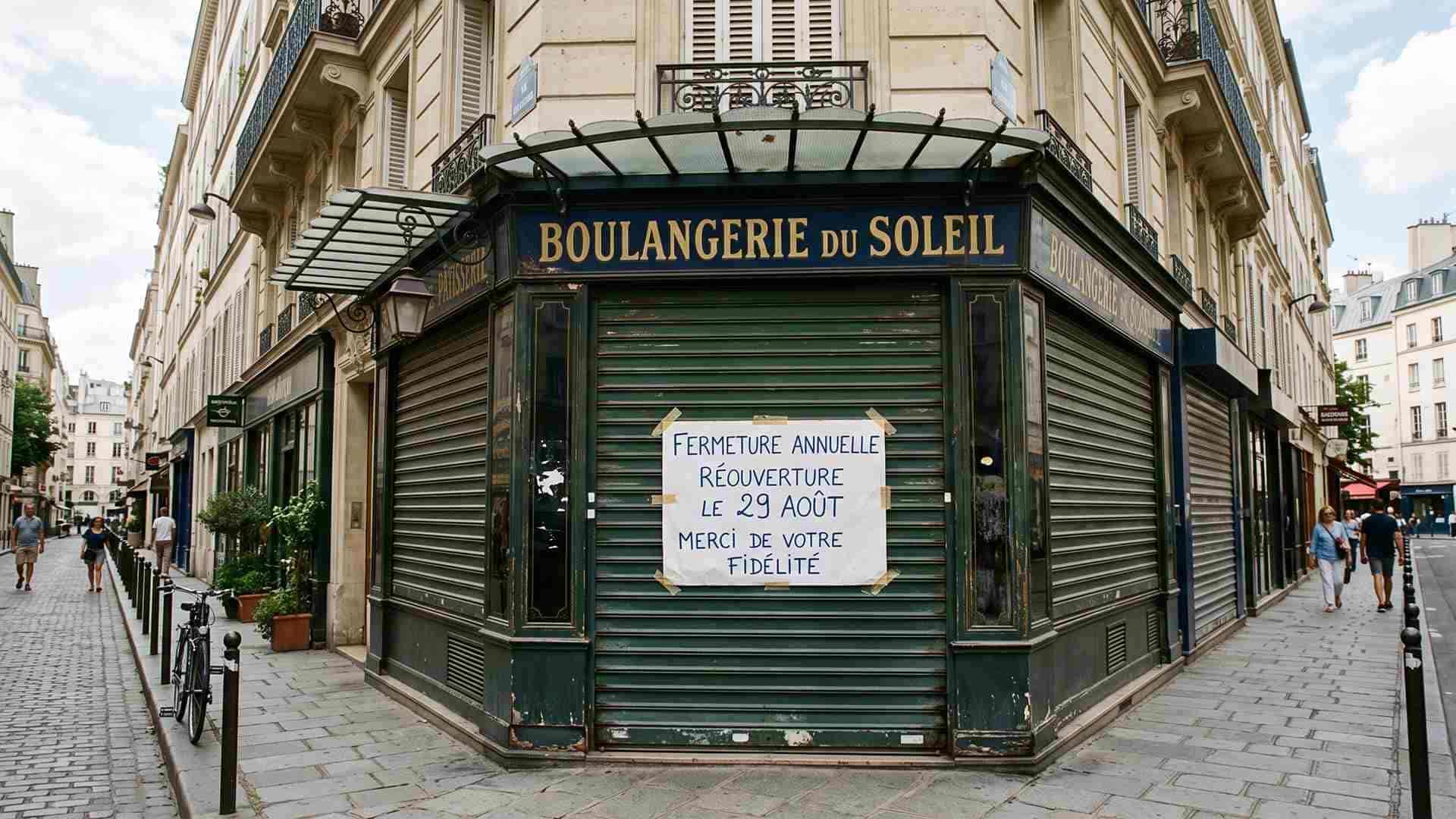
A shuttered Paris storefront with a handwritten fermeture annuelle sign in August

There is a sound Paris makes in the middle of August, and it is very close to none at all. I walked to my favourite boulangerie in the 11th on a Tuesday morning and found the metal shutter down, with a sheet of paper taped to it in ballpoint: fermeture annuelle, back on the first of September. The bistro two doors along had the same sign. So did the dry cleaner, the wine shop, and the pharmacy, which had helpfully listed which colleague three streets away was covering. The city had gone somewhere else.

That same Tuesday, five hundred miles south, Nice was full to the last room, the Promenade des Anglais was shoulder to shoulder, and a table for two in Saint-Tropez was a three-week request.

This is the thing nobody tells Americans about French timing. France does not have one high season. It has two, and they run in opposite directions. The country goes on holiday almost simultaneously, roughly from 14 July to the end of August, and when it does, the cities empty out and the coast and the mountains fill to capacity. The same week that makes Provence impossible makes Paris unexpectedly calm.

Short answer: May to June, or September to early October.

The honest answer to “when to visit France” is May to June and September to early October. These months give you warm, settled weather, a country that is fully open for business, and crowd levels well below the French summer exodus. For US travelers adding business class flights to France to the trip, they also fall outside the transatlantic summer surge.

Key facts

  • The best time to visit France is May to June or September to early October.
  • France has two opposite high seasons: the cities empty from 14 July to the end of August, and the coast and mountains fill to capacity in the same weeks.
  • Paris in August is quiet and cheaper, but many independent restaurants and shops close for two to four weeks.
  • Lavender in Provence blooms from late June through mid-July; harvest starts mid-July, so August arrivals find cut fields.
  • The Mediterranean is at its warmest in late August and September, which makes September the best swimming month on the Riviera.
  • Business class from the US runs from $1,851 round-trip through consolidator access. Source: Flyer Club consolidator data, September 2026.

What follows is the full picture, month by month and region by region, along with the booking windows that matter if you are flying up front.

The Short Answer: When to Visit France

Period Weather Crowds Business Class Price (US) Verdict
March to April Cool (45 to 60°F) in the north, mild in the south Low, with an Easter spike $2,100 to $2,900 Good value; gardens and light returning
May to June Warm (57 to 75°F), settled, long evenings Moderate $2,700 to $3,600 Best overall; lavender begins late June
July to August Hot (68 to 85°F), very hot in the south Peak on the coast, low in the cities $3,200 to $4,500 Split season; book the south 5 months ahead
September to October Warm (55 to 75°F), harvest season Dropping sharply from early September $2,000 to $2,800 Best value with excellent conditions
November to February Cold (38 to 50°F) north, mild south, Alps in snow Very low outside the holidays From $1,851 Paris and the Alps excellent; countryside quiet

Rates are round-trip, business class, per person, USD via consolidator. Source: Flyer Club consolidator data, September 2026.

France Weather Month by Month: Paris vs the South

France has no single climate: Nice in November is about as warm as Paris in May, which is why the country has a good month somewhere in it all year round.

The table below has two temperature columns rather than one, and the gap between them is the most useful thing on this page. Paris and Nice are in the same country and are not in the same climate. Nice in November is roughly as warm as Paris in May. Nice in February is warmer than Paris in April.

That single fact is what makes France so forgiving to plan. There is almost no month in the year when some part of the country is not at its best. The question is not whether to go, but which France you are going to.

Month Avg Temp (Paris) Avg Temp (Nice) Crowds Notes
January 37 to 45°F 42 to 55°F Very low Cheapest month; Alps ski season underway; Paris sales
February 37 to 47°F 42 to 55°F Low, high in the Alps French school holidays fill the mountains; Nice Carnival
March 41 to 54°F 46 to 59°F Low Paris Fashion Week fills hotels; south warming fast
April 45 to 60°F 50 to 63°F Moderate Gardens open; Easter fortnight books out
May 52 to 68°F 57 to 70°F Moderate Excellent everywhere; Cannes and Monaco spike the Riviera
June 57 to 73°F 63 to 77°F Moderate to high Longest days; lavender starts late in the month
July 61 to 78°F 68 to 82°F Peak in the south French holidays begin 14 July; Paris starts to empty
August 61 to 78°F 68 to 82°F Peak south, low in Paris Coast at capacity; city businesses closed for weeks
September 55 to 71°F 63 to 77°F Dropping fast Best value month; harvest across the wine regions
October 49 to 61°F 56 to 70°F Low Warm in the south; Paris at its most atmospheric
November 42 to 51°F 49 to 61°F Very low Beaujolais and the Beaune wine auction; quiet cities
December 38 to 46°F 44 to 56°F Low, then a holiday spike Alsace Christmas markets; Alps open mid-month

Paris weather by month and Nice weather by month — average temperatures and crowd levels. Source: Météo-France.

Read the crowd column for July and August carefully. It says two different things in the same row, and that contradiction is not an error. It is the single most important structural fact about French travel.

Best Time to Visit Paris

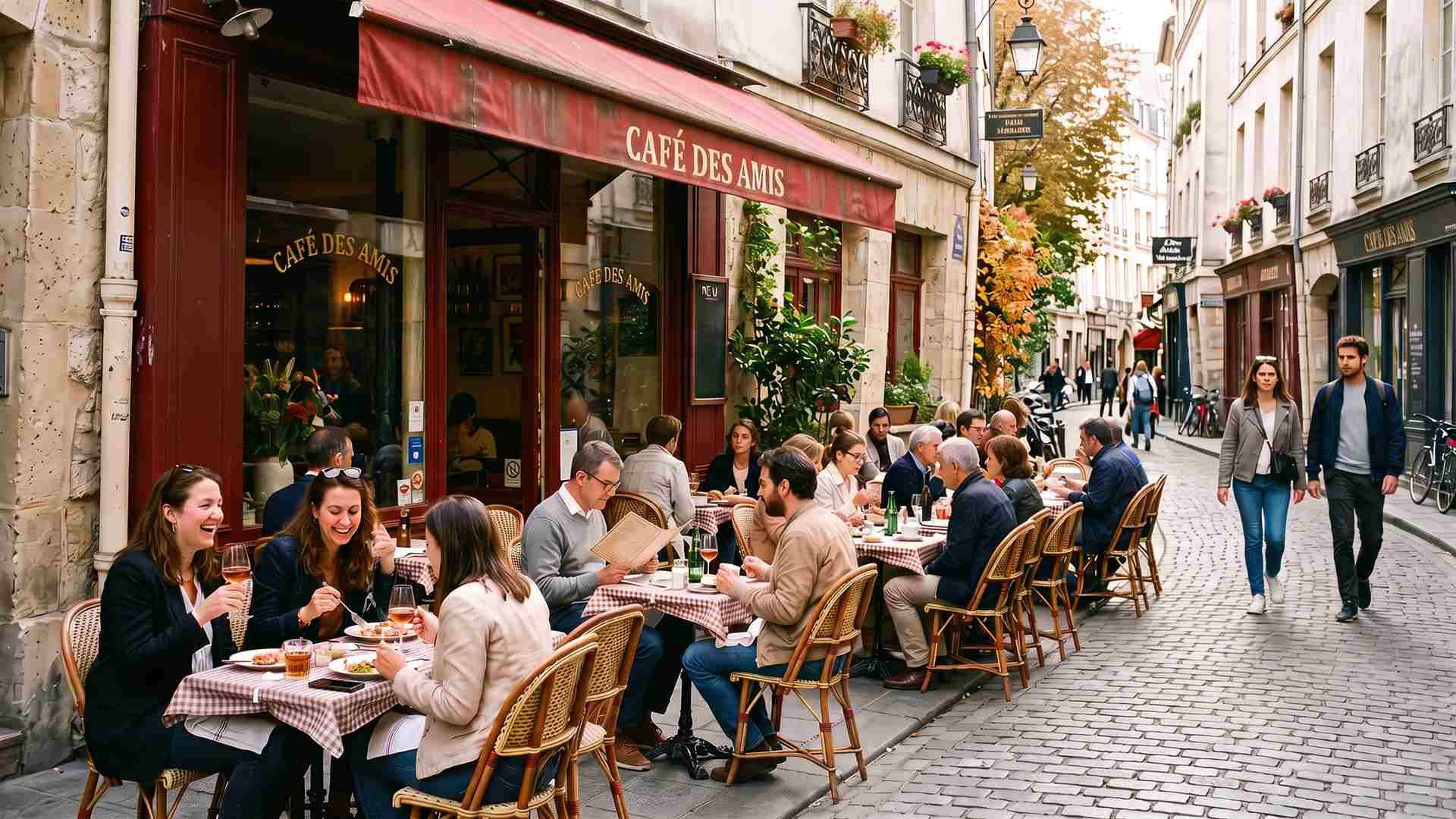
A café terrace in the Marais in late September — the best time to visit Paris

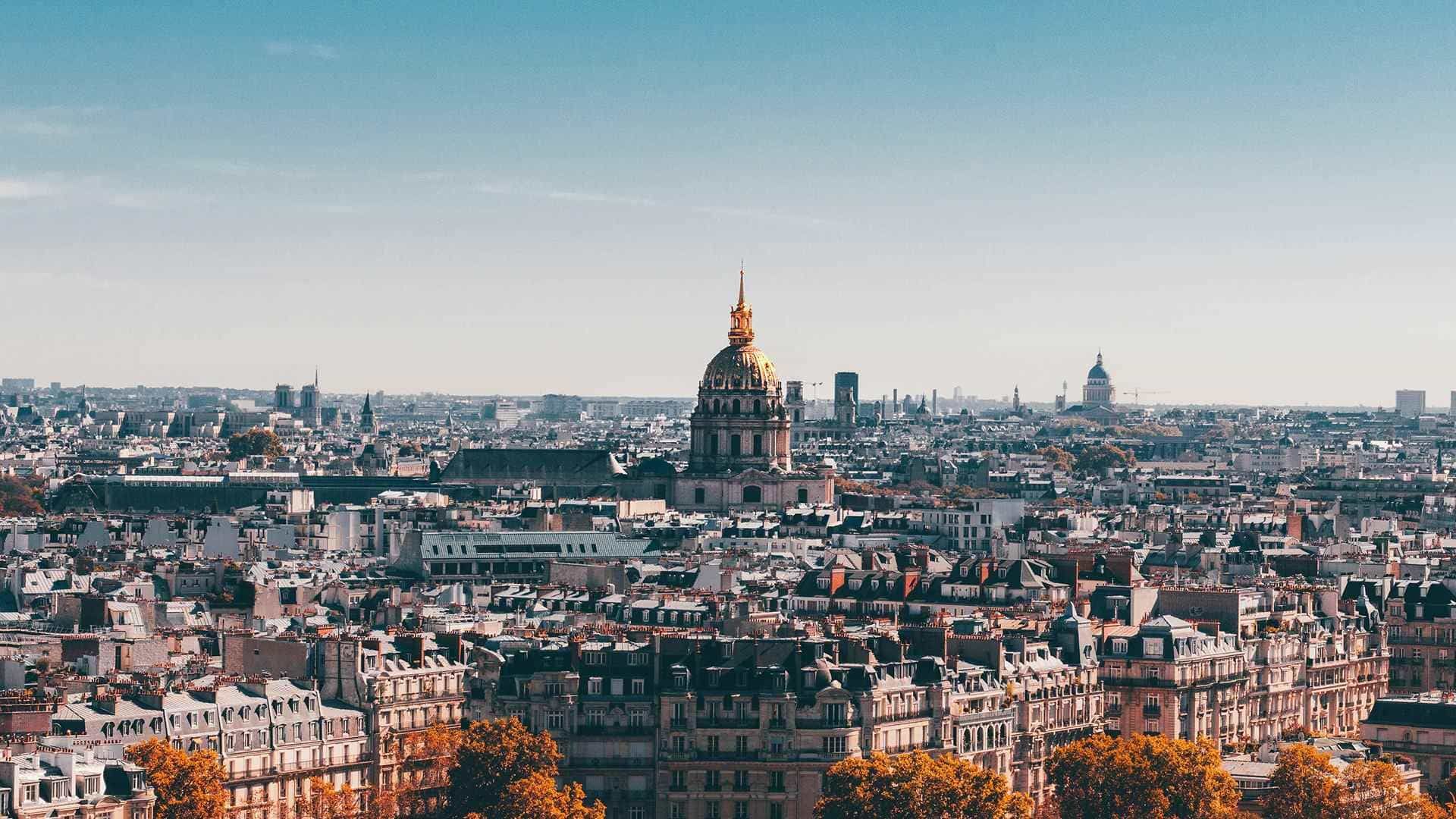
The best time to visit Paris is May, June, September or October, and November to February for the lowest prices. Paris is the exception to almost every rule in this guide, including its own country’s. It is busiest in June and September, quietest in August and January, and worth visiting in all of them.

Best months: May, June, September and October. May and June bring long evenings, café terraces that are actually pleasant, and the parks at their best. September and October bring the rentrée, the national return to work, when the restaurants reopen with new menus, the galleries launch their autumn shows, and the city is at its most itself. Weather in Paris in September runs 55 to 71°F, which is the most reliably pleasant stretch of the Paris year, and what to wear in Paris in September is a jacket rather than a coat.

The August question: Paris in August is genuinely quiet, and for a certain kind of traveler that is the appeal. Museums are busy with visitors but the streets belong to nobody, parking exists, and the Métro is bearable. Weather in Paris in August sits at 61 to 78°F, and the apartments and older hotels that make up much of the city’s stock are not all air-conditioned. The cost is that a meaningful share of the independent restaurants, bakeries and shops close for two to four weeks, including many of the ones you will have bookmarked. Hotel rates are also lower than in June or September. If your Paris is museums, monuments and walking, August works. If your Paris is food, it does not.

What to book ahead: Notre-Dame reopened in December 2024 and entry to the cathedral is free, but the official timed reservation opens only a few days before your visit — confirm the current booking window and opening hours on notredamedeparis.fr before you plan around them — which catches out travelers who plan everything months in advance. You can always join the walk-up line instead. The quietest window is early morning, before the first coach groups. The bell towers are a separate paid ticket.

Before booking an August trip to Paris: independent restaurants post their fermeture annuelle dates in early July, usually in the window or on social media. If there are two or three places the trip is built around, check them before you commit to dates rather than after you arrive.

For business travelers: avoid the two Fashion Week periods, in late February to early March and late September to early October, when Paris hotel rates rise sharply and availability tightens across the better properties. Check the dates before you fix a trip.

Suggested stay: four nights minimum. How many days you need in Paris is the question we get most: three is the minimum that works, four is comfortable, and five or six lets you add Versailles or a day in Champagne without cutting the city short. Paris punishes the three-night visit more than any other European capital, because the pleasure is in the neighborhoods and they take time.

Provence: Lavender, Heat and the Mistral

Lavender rows on the Valensole plateau in early July — peak lavender season in Provence

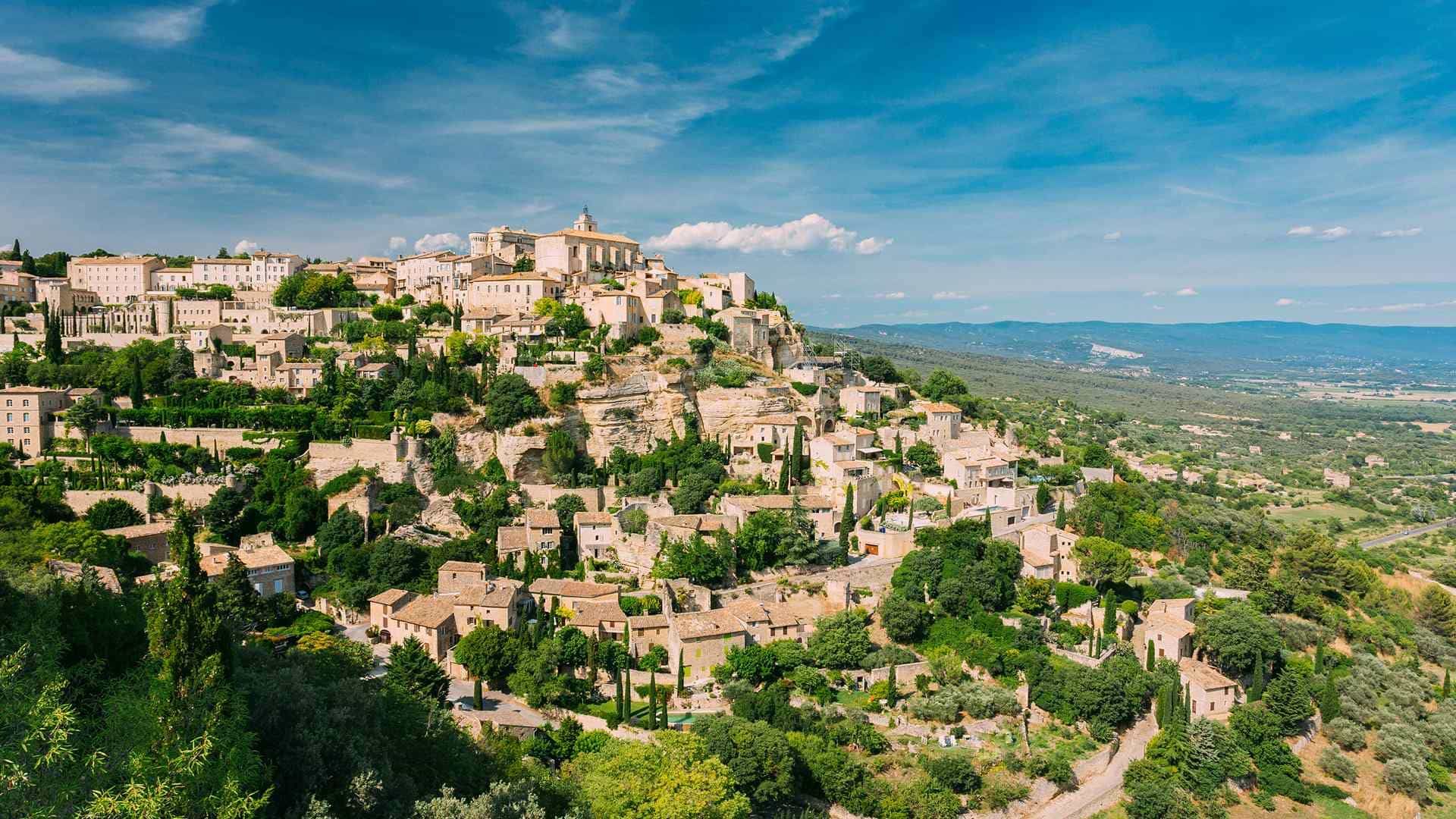
The best time to visit Provence is May, June or September — and the first two weeks of July if the trip is built around lavender. Provence is the region most often booked for the wrong month, and the mistake is almost always lavender.

The lavender window: the fields on the Valensole plateau and around Sault typically come into bloom from late June and are at their peak through mid-July. Harvest begins in mid-July and runs into early August, which means a traveler who books Provence for “lavender season” in August frequently arrives to find stubble. Altitude shifts the timing by a week or two in either direction, and so does the year’s weather, so check with a local source before fixing dates.

Best months: May, June and September. May gives you green hills, wildflowers, and villages that have not yet filled. Late June gives you lavender with the heat still manageable. September gives you the grape harvest, warm stone, swimmable rivers in the gorges, and markets that have returned to serving locals.

What to avoid: August. The heat regularly passes 95°F (Météo-France), the hill villages of the Luberon are at capacity, and the mistral, the cold northerly wind that funnels down the Rhône valley, can blow hard for three days at a time in any season and is at its most tiresome when you are already hot.

Suggested stay: five nights, based in one village. The Luberon is small, the roads are slow and beautiful, and moving hotels wastes the best part of the day.

The French Riviera: The Longest Season in France

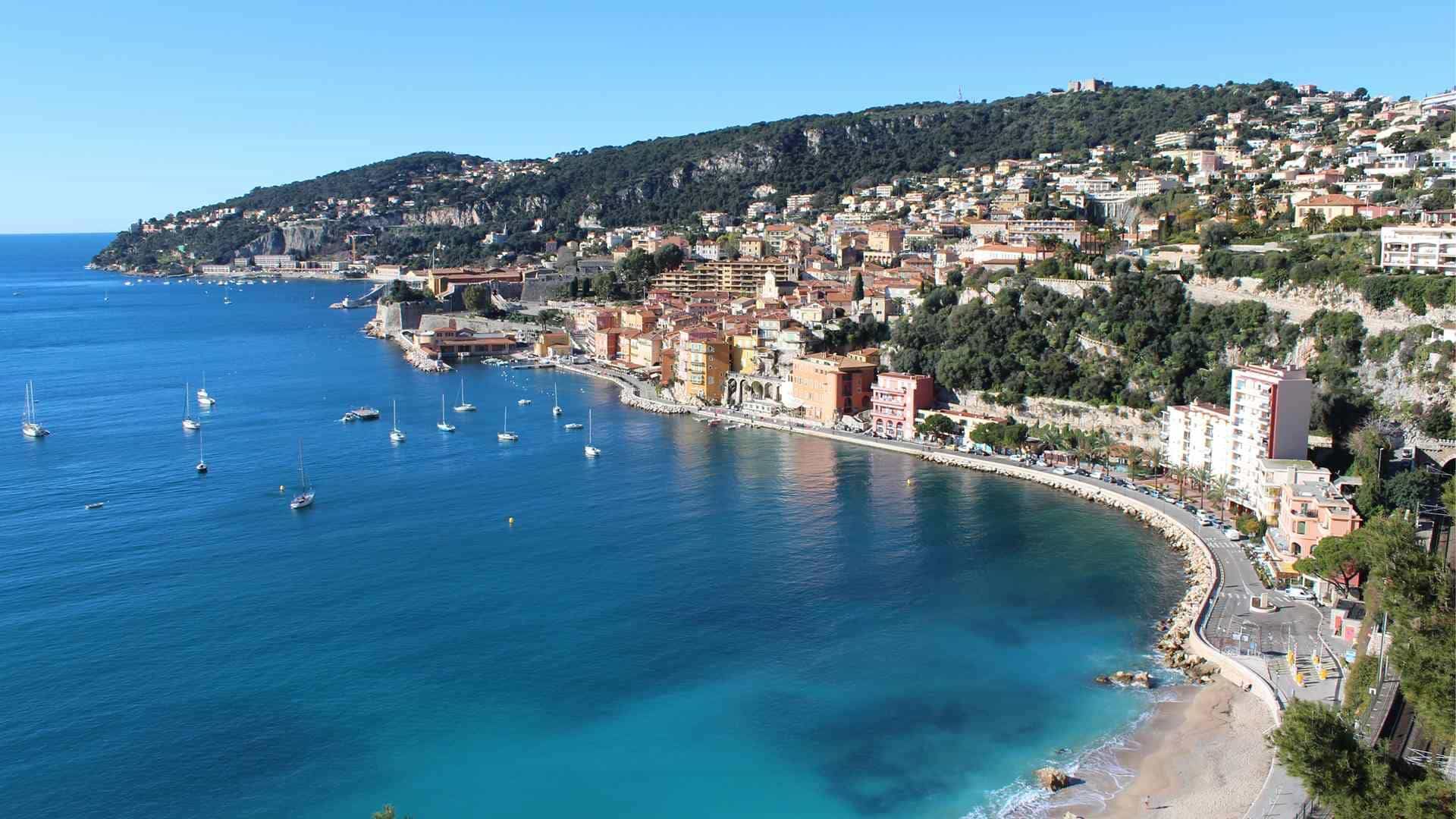
Swimmers at Villefranche-sur-Mer in September — the warmest sea of the year on the French Riviera

The best time to visit the French Riviera is June or September, and September has the warmest sea of the year. The Côte d’Azur has the longest usable season of anywhere in France. Nice, Antibes and Menton are mild enough in winter that the palm trees are not a joke, and the sea stays swimmable from June into October.

Best months: June and September. The sea, like the rest of the Mediterranean, lags the air by about two months and reaches its warmest in late August and September, not July. September gives you the warmest water of the year with a fraction of the August population. This is also the best time to visit the south of France generally: Provence, the Riviera and the Camargue all peak in the same window.

What to avoid, and when to plan around it: two events reshape the Riviera’s calendar entirely. The Cannes Film Festival in mid-May and the Monaco Grand Prix in late May both multiply accommodation rates, not just along their own stretch of coast but across Nice and Antibes as well. Neither is a reason to stay away if you want to be there, but both are a reason to know the dates before you book. Both move slightly each year, so confirm with the official festival and Formula 1 calendars rather than assuming last year’s dates. And July and August are simply the peak, with the corniche roads slow and the beach clubs booked.

The winter case: Nice in January and February is one of Europe’s genuinely underrated off-season cities, with mild days, the Carnival in February, and the Matisse and Chagall museums almost to yourself. Menton’s lemon festival runs alongside it. Weather in Nice in May already reaches 57 to 70°F, which is why the Riviera season effectively starts a month before the rest of the country’s.

Flight note: Nice has its own nonstop service from the US East Coast, mostly seasonal from spring to autumn. Flying straight into NCE rather than connecting through Paris saves most of a day on a Riviera trip.

Normandy and the Loire Valley: Green, Wet and Best in Early Summer

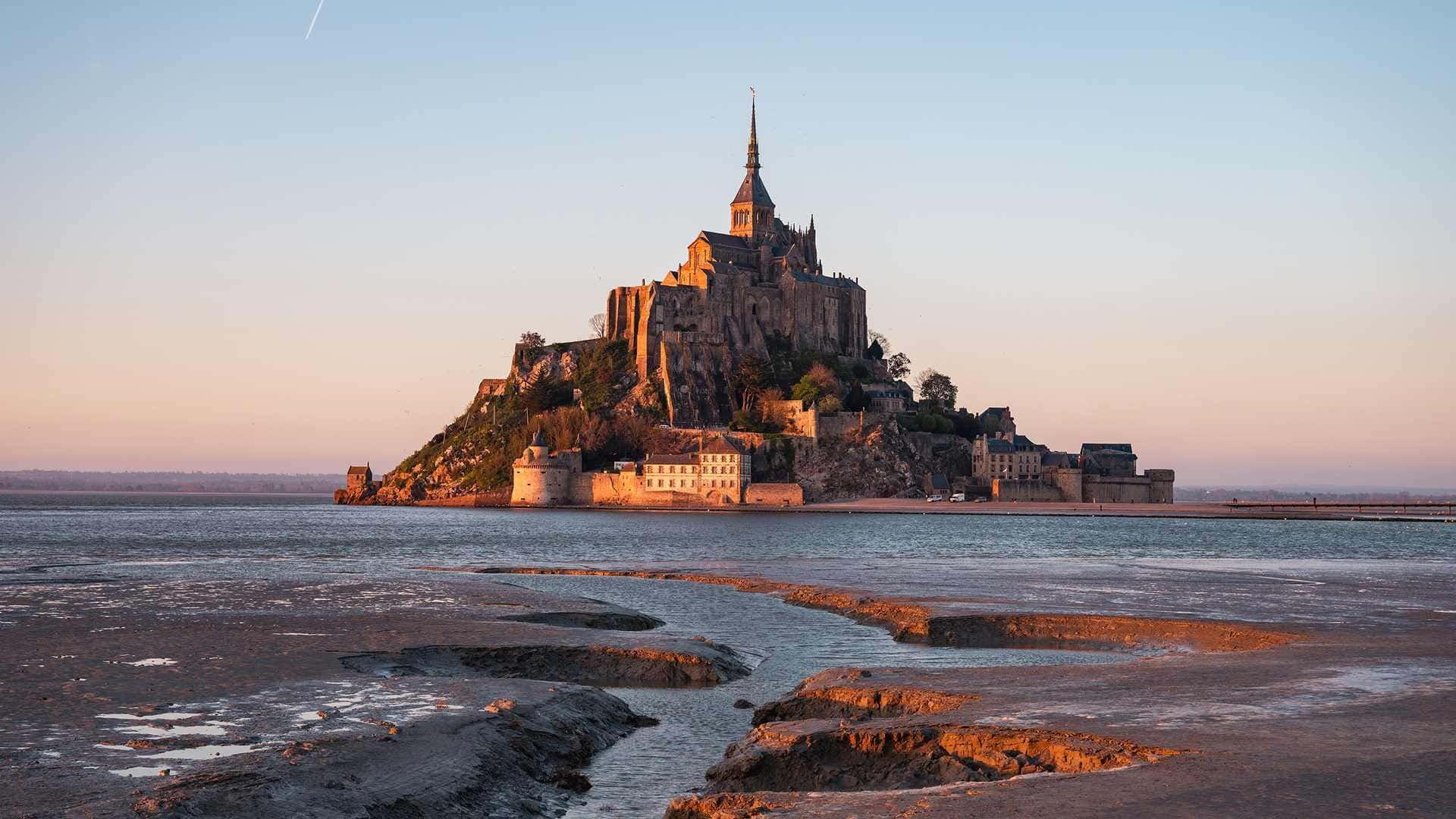
Mont-Saint-Michel at first light with the tide out — the best time to visit is early morning

The best time to visit Normandy and the Loire Valley is May, June or September, when the gardens are at their peak and the evenings are long. These two regions are grouped together because they are how most first-time visitors extend a Paris trip, and because they share a season.

Best months: May, June and September. Both regions are green, low-lying and heavily dependent on daylight and dry weather, and both are at their best in the long evenings of early summer. Normandy in particular is wetter and windier than the rest of France, so the spread between a good month and a poor one is wider here.

Normandy specifics: the D-Day beaches and the American Cemetery at Colleville-sur-Mer are moving in any weather and are best visited outside the anniversary week around 6 June, when the coast fills with commemorations and accommodation is booked a year ahead. Mont-Saint-Michel is one of the most crowded sites in France between 11am and 4pm in summer; staying on the island overnight, or arriving at opening, changes it completely.

Loire specifics: the châteaux are at their best when their gardens are, which means May, June and September. Chambord, Chenonceau and Villandry all reward an early arrival, and Villandry’s gardens in particular are the reason to time the visit rather than just fit it in.

Suggested stay: three nights each, or four for the Loire if you intend to cycle between châteaux, which is the best way to see them.

Bordeaux and Burgundy: Book Around the Harvest

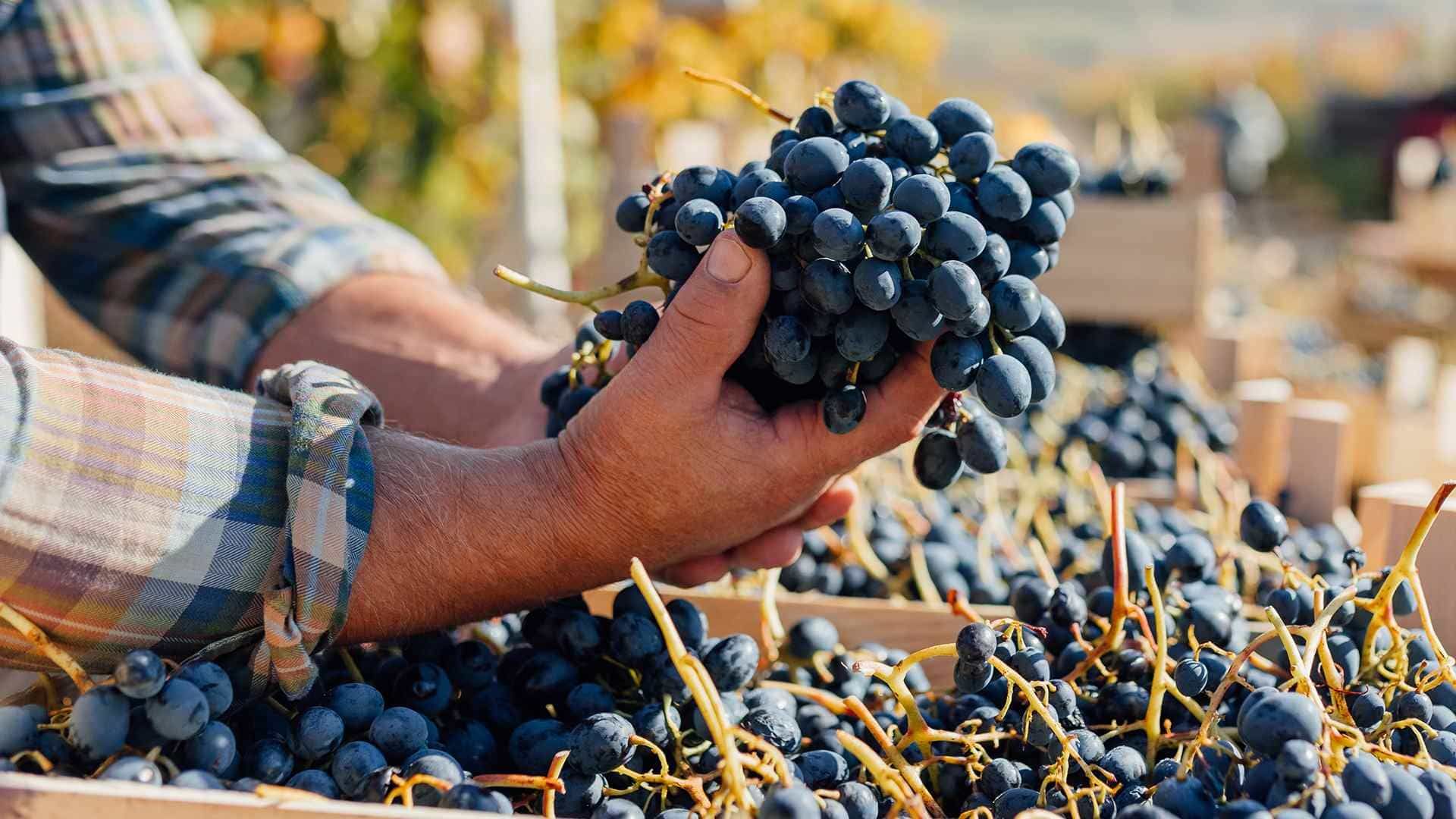
Pickers during the vendanges in Burgundy in early October — harvest season in the French wine regions

The best time to visit Burgundy and Bordeaux is September and October for the harvest, or May and June if you want producers to have time for you. France’s two great wine regions run on an agricultural calendar rather than a tourist one, and that calendar has a clear answer.

Best months: September and October. The vendanges, the grape harvest, runs from late August into October depending on the region and the year, and it is the moment the whole landscape is working. Domaines are busy, which cuts both ways: the atmosphere is extraordinary and some producers stop taking visitors while they are picking. Book tastings well ahead for harvest weeks. The same window works for Champagne, which picks earlier than Burgundy and is ninety minutes from Paris by train.

Also excellent: May and June, when the vines are green, the villages are quiet and the estates have time for you. For a first visit with serious tasting on the agenda, this is arguably the better window.

A November reason to go: the Hospices de Beaune charity wine auction, held on the third Sunday of November, turns Burgundy into the center of the wine world for a weekend, with the Trois Glorieuses celebrations around it. Beaune is small and books out early.

What to avoid: August, when many family domaines close and the region is waiting for the harvest rather than doing anything.

The French Alps: Two Seasons, Both Good

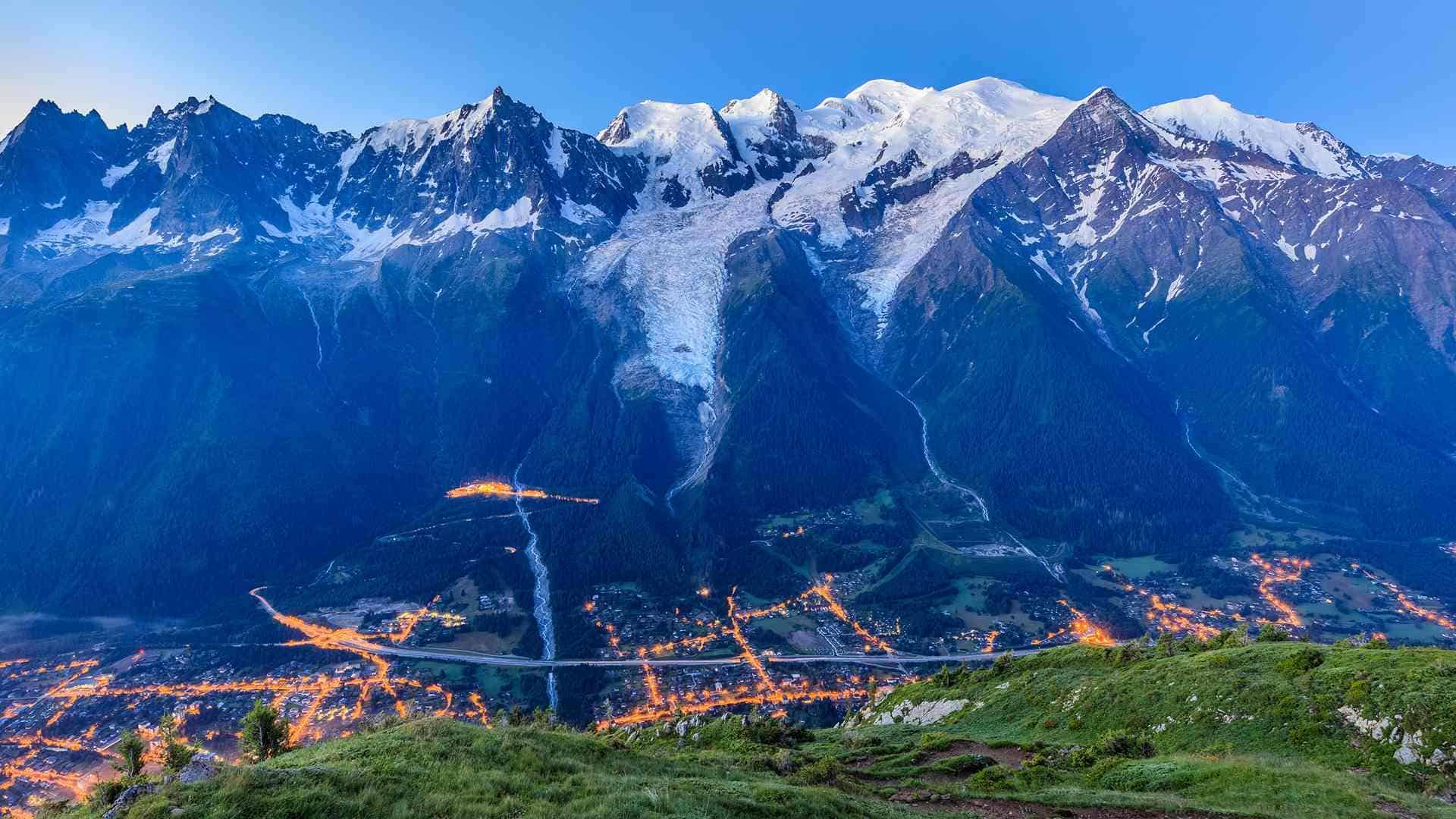
The Mont Blanc massif above Chamonix in late March — the end of the French ski season

Ski season in the French Alps runs from mid-December to mid-April, with the best snow and light in February and March; July and August are the hiking season. The Alps are the reason France is a genuine twelve-month destination, and they invert the rest of the calendar.

Ski season: roughly mid-December to mid-April, with the most reliable snow and the longest days in February and March. The highest ski resorts in France, Val Thorens, Tignes and Val d’Isère, open earliest and close latest.

When to avoid: the French school holidays in February, which run in staggered regional waves across most of the month and fill the major resorts entirely, and the Christmas and New Year fortnight. The best value with good snow is mid-January and the second half of March, when the days are longer, the sun is higher and the crowds have gone.

The summer case: Chamonix, Annecy and the Haute-Savoie in July and August are a completely different proposition, with hiking, lake swimming and the Mont Blanc massif at its most accessible. This is one of the few parts of France where August is a good idea, because the mountains absorb crowds in a way the coast cannot.

Getting to the Alps: Geneva is the gateway for most of the big French resorts, with road transfers of roughly one to three hours depending on the valley. Lyon and Chambéry serve others. Build the transfer time into your arrival day rather than assuming a same-day ski afternoon.

Suggested stay: a full week for skiing. Anything less does not justify the transfer time from Geneva or Lyon.

Shoulder Season: Why May and September Beat Summer

The French shoulder seasons are May into June and September into early October — the only weeks when the whole country is both comfortable and fully open. The shoulder season in France, May into June and September into early October, is where almost every repeat visitor ends up:

  • Weather: settled and warm across the whole country at once, 57 to 75°F, which is the only time of year that is true. In July the south is too hot and in November the north is too dark
  • Openness: everything is trading. This sounds obvious until you have stood outside a shuttered Michelin kitchen in August or a closed family domaine in Burgundy
  • Crowds: the French holiday exodus runs from 14 July to the end of August, and it dictates the entire peak. Move either side of it and the coast, the hill villages and the château routes empty out
  • Price: accommodation outside Paris falls sharply once the exodus ends, and business class fares from the US sit below the transatlantic summer surge

France in May and June: Everything Open, Everything Green

A Luberon hill village in late May with green hills and no tour coaches

Late May and June are the strongest weeks of the French year. The days are at their longest, the terraces work, the gardens are at their peak, and the lavender begins in the final week of June. The whole country is trading and nothing is yet full. Weather in France in May runs 52 to 68°F in Paris and 57 to 70°F in Nice (Météo-France).

The two things to watch are the Riviera in the second half of May, when Cannes and Monaco distort pricing across the coast, and the run of French public holidays in May, which produce several long weekends and busy domestic travel. Neither is a reason to avoid the month. Both are a reason to check a calendar before booking.

Paris in September and the Rentrée: The Best Value of the Year

September is the value answer and the connoisseur’s answer at the same time. French schools return in the first days of the month and the change is immediate: by the second week the coast has emptied, the hill villages are quiet, and the cities have come back to life with the rentrée.

The weather holds. Early September on the Riviera is warmer in the water than June, Provence is still in the mid-seventies, and Paris gets its most reliably pleasant stretch of the year. The wine regions are picking. If you asked us to name one month for a first serious trip to France, this would be it. The same shoulder-season logic runs across Europe — our guide to the best time to visit Greece shows how the Mediterranean calendar compares.

When to Book Business Class Flights to France from the USA

Business class to France should be booked 3 to 4 months ahead for May and June, 4 to 5 months for July and August, and 60 to 90 days ahead for September and October. Timing the trip is half of it. Timing the booking is the other half. The fare bands are in the first table at the top of this guide; what changes below is when you need to act on them.

Travel Period Lead Time Book By What Drives It
March to April 60 to 90 days December to January The Easter fortnight is the constraint; the rest of the window stays open
May to June 3 to 4 months January to March Strongest demand of the year, and Riviera dates around Cannes and Monaco go first
July to August 4 to 5 months February to March Peak. The south fills well before the cities do
September to October 60 to 90 days June to August Harvest weeks in Burgundy and Bordeaux move fastest of anything in autumn
November to February 30 to 60 days September to January Lowest fares of the year, and booking earlier rarely improves them

Paris is one of the deepest premium transatlantic markets in the world, with nonstop service from more than a dozen US cities and four carriers competing head to head on the busiest routes. That depth means more consolidator inventory and shorter practical booking windows than a thinner market. The rules behind these windows are in our guide to when to book business class, and the fare mechanics in cheap business class flights to Europe.

Two practical notes on airports. Charles de Gaulle (CDG) takes almost all the long-haul traffic and connects to central Paris in about 35 minutes on the RER B, or 45 to 60 by car depending on the hour. Orly (ORY) is closer to the city and handles a small number of transatlantic services. If your trip continues to the south, check whether flying into Nice or Lyon directly beats a Paris connection, because it frequently does.

Rail times worth knowing before you book a second flight. Paris to Avignon is 2 hours 40 minutes by TGV, Paris to Bordeaux just over 2 hours, Paris to Marseille about 3 hours 10, and Paris to Nice around 6. For everywhere except the Riviera and the deep south, the train beats a connecting flight door to door once you count the second airport.

Business Class to France: Airlines and Prices

Six carriers fly business class from the US to Paris, five of them nonstop to Charles de Gaulle, with consolidator rates from $1,851 round-trip. France, like Britain and unlike most of the Mediterranean, is a nonstop market first.

Airline Route Type US Gateways Business Class Product Consolidator Rate (RT)
Air France Nonstop to CDG JFK, EWR, BOS, IAD, ATL, ORD, MIA, LAX, SFO, SEA, DFW, IAH Business (A350 / 777). La Première is Air France’s first class, sold separately From $1,995
Delta Nonstop to CDG JFK, BOS, ATL, DTW, MSP, LAX, SEA Delta One Suite (closing door) From $1,950
United Nonstop to CDG EWR, IAD, ORD, SFO, LAX Polaris From $1,895
American Nonstop to CDG JFK, PHL, ORD, DFW, MIA, CLT Flagship Business From $1,875
La Compagnie Nonstop to Paris Orly, all-business cabin EWR Single-cabin lie-flat, boutique service From $1,851
Lufthansa / British Airways / KLM Via European hub Most major US cities Varies by carrier From $1,851

Rates as of September 2026, round-trip, business class, per person. Route maps change seasonally, so confirm service on your dates.

Two options deserve a note. La Compagnie flies an all-business-class aircraft from Newark to Orly, with no economy cabin at all and a boutique ground experience; it is a genuinely different product rather than a cheaper version of the same one, and it is worth asking about if the schedule fits. And Nice has its own seasonal nonstop service from the East Coast, which is the single biggest time saving available on a Riviera or Provence trip, since it removes both the Paris connection and the five-hour train.

For how the European carriers compare cabin by cabin, see best business class airlines to Europe; the two hub alternatives to a Paris nonstop are covered in our KLM business class review and Lufthansa business class review.

The usual trade-off applies in reverse here. On the Paris routes a nonstop is normally both the fastest and the most competitively priced option, so the reason to consider a connection is a specific seat you want or a regional airport you would rather land at. Which of those applies is the first thing we ask about on a quote.

What We Recommend for US Travelers

A Paris street market in the first week of the rentrée in September

For a first trip to France, the second half of September is the strongest choice.

For first-time visitors: the second half of September. Paris has come back to life after the exodus, the Riviera sea is at its warmest, Provence is still in the seventies, the wine regions are picking, and prices across the board have dropped from their summer peak. Ten days split between Paris and one region is the shape that works.

For Provence and lavender: the first two weeks of July, with the caveat that bloom timing moves by a week or two each year and altitude changes it further. If lavender is the reason for the trip, confirm with a local source before you book flights, not after.

For the Riviera: June or September. September for the warmest water and the smallest crowds, June if you want the long evenings. Both are better than August, and both need booking around Cannes and Monaco in May.

For a city-only trip: November through early March. Paris has the lowest business class fares of the year, the museums are quiet, the restaurant scene is at full strength, and Nice gives you a mild-weather alternative three hours away by train if the north gets too gray. This is also the best time to visit Paris on a budget.

For business travel: September through November and March through June are the strongest working months in the French calendar. August is effectively closed, and the two Fashion Week periods make Paris hotels difficult and expensive. A Thursday and Friday of meetings in Paris extends easily into Burgundy, Normandy or the Loire for the weekend, all within two hours by train.

Combining France with another country: London and Paris in one trip works best in the same May–June and September windows, and the Eurostar makes it a two-and-a-half-hour city change rather than a flight.

France does not have one best season. It has a country that empties its cities in August and fills its coast, and reverses that completely by the end of September. Work out which France you want, the coast, the cities, the vineyards or the mountains, and let that choose the month. Then sort the flights early, because the shoulder weeks are exactly when everyone else who has worked this out is booking too.

For current rates and availability on your specific dates, see business class flights to Paris or get a free quote from Flyer Club. We will confirm the specific airline, aircraft, and consolidator rate on your route. Get a Free Quote →

Frequently Asked Questions

What is the best time to visit France?

May to June and September to early October. These months combine settled warm weather across the whole country, a France that is fully open for business, and crowd levels below the French summer holiday exodus. September is the single strongest month, with harvest in the wine regions and the warmest sea of the year on the Riviera.

When should I avoid visiting France?

It depends on where you are going, which is what makes France unusual. Mid-July to the end of August is the worst time for the Riviera, Provence and the Atlantic coast, which run at capacity. The same weeks are among the quietest in Paris, because the city empties, but a significant share of independent restaurants and shops close for two to four weeks.

Why does everything close in France in August?

French workers take their annual leave in a concentrated block, traditionally between 14 July and the end of August, and small independent businesses close entirely rather than operate short-staffed. You will see handwritten fermeture annuelle signs on bakeries, bistros and shops across Paris and the northern cities. Museums, monuments, hotels and larger restaurants stay open. It is the independents that shut.

What is the best month to visit Paris?

May, June, September or October. September and October are the strongest, because the rentrée brings the restaurant and cultural calendar back to full strength after the summer. For pure value, November to February has the lowest business class fares of the year and a city that works perfectly well in the cold.

How many days do you need in Paris?

Four nights is the practical minimum for a first visit: two for the major museums and monuments, two for the neighborhoods that make the city worth the trip. Three days in Paris works if you accept choosing between arrondissements. Five or six nights adds Versailles, Champagne or Giverny without shortening the city itself.

When is lavender season in Provence?

The fields on the Valensole plateau and around Sault typically bloom from late June through mid-July, with harvest starting in mid-July and running into early August. Travelers who book Provence for August often arrive to find the fields already cut. Timing shifts by a week or two with altitude and with the year’s weather, so confirm locally before fixing dates.

What is the best time to visit the French Riviera?

June and September. The Mediterranean lags the air temperature by about two months and is at its warmest in late August and September, so September gives you the best swimming of the year with a fraction of the August crowds. Watch the Cannes Film Festival in mid-May and the Monaco Grand Prix in late May, both of which multiply accommodation rates along the whole coast.

Is August a good time to visit Paris?

Yes, with one condition. The city is unusually quiet, hotel rates are lower than in June or September, and the monuments and museums are fully open. But many independent bakeries, bistros and shops close for several weeks. If your trip is built around museums, architecture and walking, August is a good choice. If it is built around food, choose another month.

What is the mistral?

A cold, dry northerly wind that funnels down the Rhône valley into Provence and the western Riviera. It can blow hard for several days at a time in any season, clears the sky spectacularly, and is most wearing in summer when the heat is already high. It is a normal feature of Provençal weather rather than a reason to change your dates.

When is the wine harvest in France?

Late August into October, depending on the region, the grape variety and the year. Champagne and Burgundy generally pick earlier than Bordeaux. Harvest is an extraordinary time to visit, but some family domaines stop receiving visitors while they are picking, so book tastings well in advance.

When is ski season in the French Alps?

Roughly mid-December to mid-April, with the most reliable snow and the longest days in February and March. Avoid the French February school holidays, which run in staggered waves across most of the month and fill the major resorts, and the Christmas fortnight. Mid-January and the second half of March offer the best combination of snow, sunlight and value.

What is the best time to visit the south of France?

June or September for the coast and Provence together. September has the warmest sea of the year and the grape harvest inland; June has the longest evenings and the start of the lavender. May is excellent everywhere except the second half, when Cannes and Monaco raise prices across the whole Riviera.

How much does business class to France cost from the USA?

Roughly $1,851 to $4,500 round-trip through consolidator access, depending on season and gateway. The lowest fares fall between November and February, the highest in July and August, and the September to October window sits close to the annual floor while the weather is still excellent. Paris is one of the deepest premium transatlantic markets in the world, with nonstop service from more than a dozen US cities and four carriers competing on the busiest routes, which generally means better pricing and more inventory than thinner European destinations. Published fares typically run well above the consolidator rate on the same flights.

Do I need a visa for France as a US citizen?

No. US citizens can visit France and the wider Schengen Area for up to 90 days in any 180-day period without a visa. Two things at the border have changed, though. The EU’s Entry/Exit System (EES) has been fully operational since 10 April 2026: passport stamps are replaced with a digital record, and your fingerprints, facial image and passport data are registered on arrival (European Commission). Separately, the EU’s ETIAS pre-authorization — which is not a visa — is expected in the last quarter of 2026 at a fee of €20, with a six-month transitional period during which travel without it is still allowed. Confirm current requirements before booking.