menu

Best Time to Visit Greece from the USA in 2026: Month-by-Month Guide

Written by
Victor Kerman
Victor KermanChief Growth Officer
linkedinLinkedIn

Responsible for growth strategy, market expansion, and performance.

Reviewed by
Nick Bakin
Nick BakinFounder
linkedinLinkedIn

Leads Flyer Club's vision, strategic direction, and long-term growth.

35Published:
Summarize with AI
ChatGPT iconChatGPTClaude iconClaudeGrok iconGrokPerplexity iconPerplexity

Best time to visit Greece for US travelers in 2026 — month-by-month weather, crowds, prices, and when to book business class to Athens and the islands.

The first time you see the Acropolis matters. Not the photo — everyone has seen the photo — but the specific quality of light on that particular morning, the quiet before the tour buses arrive, the way the Parthenon columns catch the low sun and turn the color of warm honey. That experience is entirely dependent on when you go. In the middle of August, in the middle of the day, you will wait in a queue that folds back on itself twice, sweat through forty minutes on hot marble, and wonder what everyone else can see that you cannot.

The honest answer to "when to visit Greece" is: April to June and September to October. These are the months when Greece is at its best — warm enough to swim, uncrowded enough to move, and priced below the summer premium that July and August command. For US travelers adding business class flights to the trip, the shoulder season also aligns with the lowest transatlantic premium fares, which makes the timing argument even stronger.

The Short Answer: When to Visit Greece

Period Weather Crowds Business Class Price (US) Verdict
April – May Warm (18–25°C), sunny, some rain Low — excellent $2,200–$3,200 RT Best overall — good weather, low crowds, shoulder price
June Hot (25–30°C), reliably sunny Building fast $2,800–$3,800 RT Good early June; late June approaching peak
July – August Very hot (30–38°C), island winds Peak — very crowded $3,800–$5,500+ RT Most popular; highest prices; book 5–6 months ahead
September – October Warm (22–28°C), calm seas Dropping fast after mid-Sept $2,400–$3,400 RT Best for islands; warm sea; fewer crowds than summer
November – March Mild (10–18°C), wetter Very low $1,800–$2,400 RT Athens and mainland excellent; islands off-season

Rates are round-trip, business class, per person, USD via consolidator. Source: Flyer Club consolidator data, September 2026.

Month-by-Month Guide to Greece

Month Avg Temp (Athens) Sea Temp Crowds Notes
January 10–13°C 16°C Very low Athens museums empty; islands mostly closed
February 11–14°C 16°C Very low Carnival season in some cities; cheapest flights
March 13–17°C 16°C Low Good for Athens and the Peloponnese; sea still cold
April 17–22°C 18°C Low–moderate Greek Easter (dates vary): book early that week
May 21–26°C 20°C Moderate Arguably best month overall; warm but not hot; sea swimmable
June 25–30°C 23°C High (building) Early June still good; late June peak begins
July 28–33°C 25°C Peak Meltemi winds on the islands; very hot; very crowded
August 29–34°C 26°C Peak Busiest month; Greek domestic holidays; highest prices
September 25–29°C 25°C Moderate–low Warmest sea of the year; crowds drop; best month
October 20–24°C 23°C Low Still warm; good hiking; some island venues closing
November 15–19°C 21°C Very low Athens excellent; islands quieting fast
December 12–16°C 18°C Very low Christmas in Athens is underrated; islands off-season

Best Time to Visit Athens

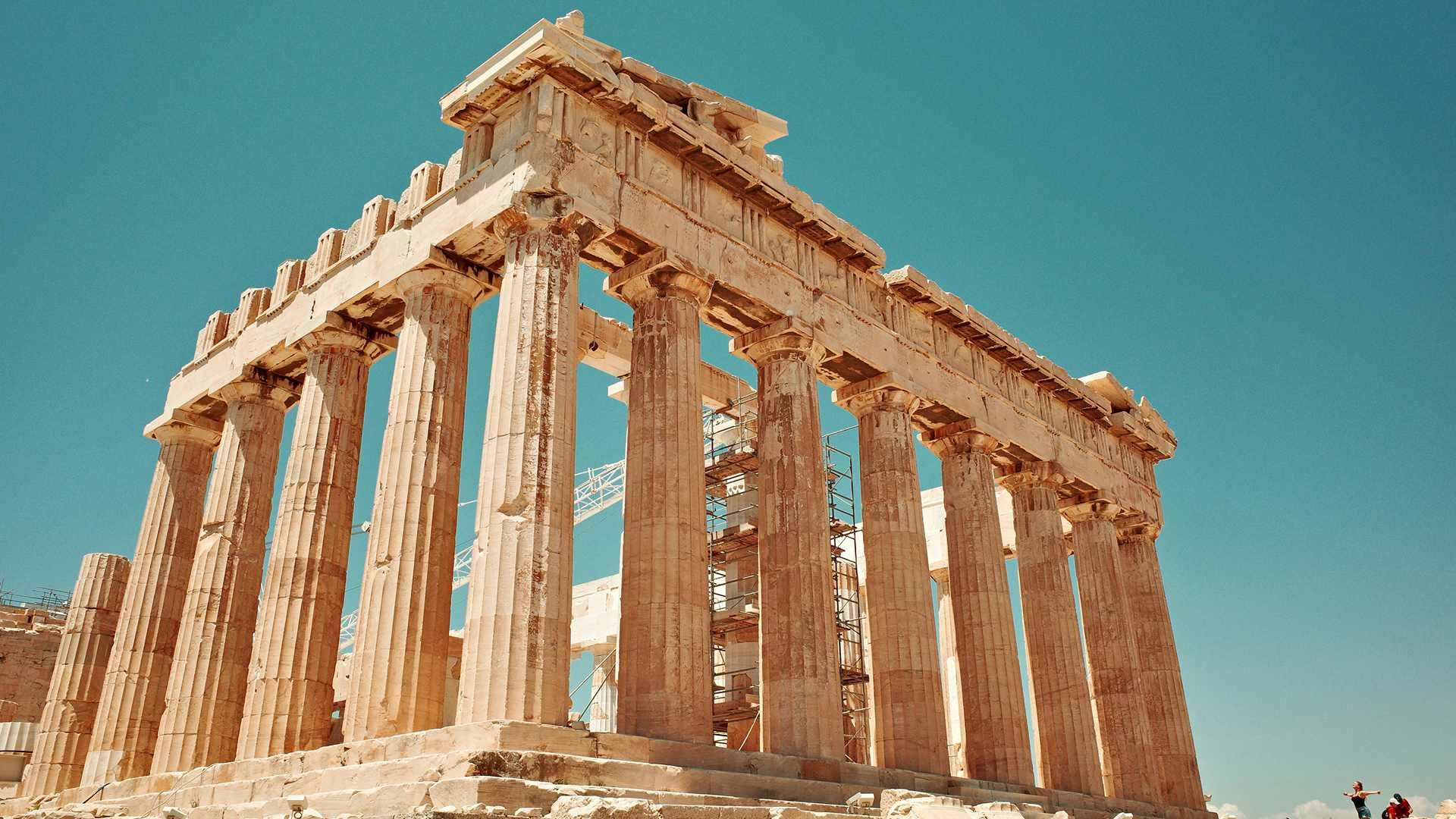
The Parthenon on the Acropolis in Athens in clear morning light

Athens is Greece's most resilient destination across the calendar. The city functions year-round, the Acropolis and the Acropolis Museum are open every month, and the restaurant and hotel infrastructure does not shut down in winter the way island businesses do.

Best months: April, May, October, November. Temperatures are comfortable for walking — the Acropolis involves significant uphill terrain on exposed stone in direct sun, which is substantially more pleasant at 20°C than at 35°C. October is particularly good: the summer tourist peak has passed, the city's cultural calendar is active, and the light on the Parthenon in early morning in autumn is the image most photographers frame their trips around.

What to avoid: Mid-July and August. Acropolis queues in peak summer regularly run 45–90 minutes; the marble radiates heat; and the light at midday is harsh for photography and exhausting for walking. The Acropolis opens at 8am — arriving at opening is the single most effective thing you can do in any season to improve the experience.

Greek Easter: Greek Orthodox Easter falls between April and early May and is the most significant travel period in the Greek domestic calendar. Accommodation books out months in advance and prices spike, but the experience — particularly the midnight Anastasi service — is one of the more remarkable things Greece offers. Book 4–5 months ahead if visiting during Easter week.

Best Time to Visit Santorini

Whitewashed houses above the caldera in Santorini at sunset

Santorini is the most photographed Greek island and, in July and August, the most crowded place in the country per square kilometer. The caldera view from Oia at sunset is genuinely extraordinary; getting to it in August involves navigating cruise ship passenger volumes that can turn the village's narrow lanes into a standstill.

Best months: May, June, September, early October. The island is warm enough to swim, the terraces are uncrowded enough to actually sit on, and the sunset at Oia is the experience it is supposed to be. September is the strongest single month for Santorini: the sea is at its warmest (25°C), the summer crowds have thinned, and the vine harvest on the island is active.

What to avoid: Late July and all of August. Santorini's physical size — the island is small — combined with peak cruise ship arrivals (multiple ships per day, 3,000–5,000 passengers each) creates crowd concentrations in Oia and Fira that make simple movement difficult. Restaurants require booking weeks in advance; hotels charge the highest rates of any destination in Greece.

Flight approach: Santorini's airport (JTR) receives European flights but no US direct service. The standard approach from the US is to fly business class into Athens (ATH) and connect by Greek domestic flight (30 minutes) or high-speed ferry (5–6 hours, but more scenic). The Athens connection is straightforward; book the domestic Aegean Airlines or Sky Express flight well in advance for peak summer.

Best Time to Visit Mykonos

Windmills and whitewashed buildings on the waterfront in Mykonos

Mykonos operates on a different seasonal logic than most Greek islands: it is almost entirely a summer destination, with most of its restaurants, clubs and beach clubs operating only between May and October. Unlike Santorini, which has some appeal year-round, Mykonos in November is mostly closed.

Best months: June and September. June gives you the Mykonos beach club scene before the full July–August density; September gives you warm weather, functioning venues, and significantly smaller crowds. The island's nightlife is at its most active in July and August, which is simultaneously the best and the worst time depending on what you are looking for.

Realistic expectations: Mykonos in peak summer is one of the most expensive leisure destinations in Europe. A beach club day bed at peak summer costs $150–$400. Hotel rooms that cost $200 in June cost $800 in August. September brings this back to a reasonable range while keeping the weather excellent.

Best Time to Visit Crete

Rocky coastline and turquoise water on the coast of Crete

Crete is Greece's largest island and its most geographically diverse — beaches, mountains, gorges (the Samaria Gorge is one of Europe's most significant hikes), ancient Minoan palaces, and a distinct culinary identity that is considered the origin of the Mediterranean diet. Because of its size, it handles summer crowds better than the smaller Cyclades.

Best months: May, June, September, October. The Samaria Gorge — a 16 km walk through a limestone canyon to the Libyan Sea — operates May through October and is best done in May or October, when the heat is manageable. The beaches on the north coast (Elafonisi, Balos) are at their best in June and September.

Extended season: Crete's climate makes it one of the few Greek islands viable in November and even early December. Heraklion and Chania have functioning restaurant and hotel scenes year-round, and the Minoan archaeological sites (Knossos) are excellent in any weather.

Best Time to Visit Rhodes and the Dodecanese

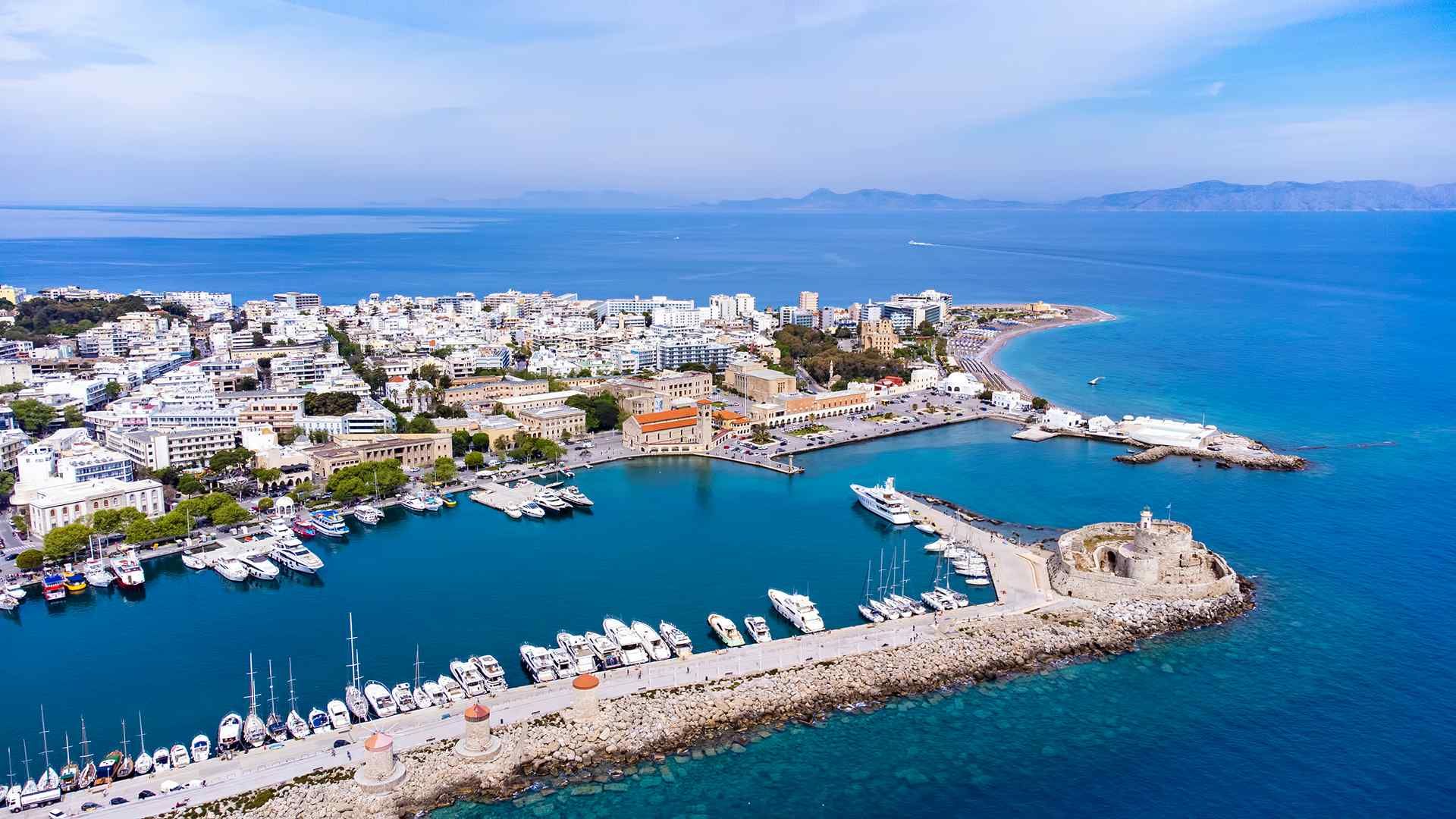
Aerial view of Mandraki harbour in Rhodes town

Rhodes is Greece's fourth largest island and its most southerly major destination, which means a longer warm season than the Cyclades. The medieval Old Town of Rhodes — a UNESCO World Heritage Site with Crusader-era walls — is compelling year-round, and the island's south-east coastline has some of the clearest water in the Aegean.

Best months: May, June, September, October. Rhodes in May is warm (23–26°C), the beaches are uncrowded, and the Old Town can be explored without the July–August heat and cruise ship volume. October is surprisingly strong: the sea stays warm (23°C), the island is quieter, and the quality of light in the Old Town in autumn is excellent.

Shoulder Season: The Real Best Time to Visit Greece

The shoulder season — April through early June and mid-September through October — is the answer most experienced Greece travelers arrive at after their first August visit. The mathematics are simple:

  • Weather: daytime temperatures in shoulder season range 20–28°C — warm enough to swim, comfortable for walking, not hot enough to require a full retreat to shade between 11am and 4pm.
  • Crowds: the Acropolis, Santorini's Oia and Mykonos town all function as they are meant to function — as places to visit rather than to navigate through.
  • Price: accommodation and restaurants are 30–55% cheaper than peak summer. Hotels that are fully booked in August have availability with a week's notice in October.
  • Business class flights: consolidator rates from the US are $600–$1,500 lower round-trip in shoulder season than at peak — a meaningful amplifier on the total trip savings.

Greece in September: The Peak of the Season

September is the single strongest month for Greece across almost every metric. The Aegean sea temperature hits 25°C — warmer than July. The European summer crowds have moved on after mid-month. Hotel rates drop 20–30% from the August peak. And the light in the late afternoon across the Cyclades in September is what travel photographers spend careers chasing. For US travelers, consolidator business class rates in September run $600–$1,200 less round-trip than the same flights in August. Greece in September is the rare case where the best timing and the best price coincide.

Greece in October: Value Without Sacrifice

Greece in October delivers most of what September offers at lower prices. The sea stays warm (23°C) through mid-October — swimmable for most travelers. Athens is at its finest: the Acropolis queues are short, the light on the Parthenon in early morning is extraordinary, and the city's restaurant scene is fully operational. Hotel rates on the islands drop another 15–25% versus September.

The trade-off: some smaller island beach clubs and restaurants begin closing after mid-October, and the nightlife infrastructure of Mykonos and Ios operates at reduced scale. Early October is stronger than late October for the islands; late October is ideal for Athens, Thessaloniki and the Peloponnese. For travelers prioritizing atmosphere over clubs, this is not a disadvantage.

When to Book Business Class Flights to Greece from the USA

Travel Period When to Book Consolidator Rate (RT) Notes
April – May 60–90 days out $2,200–$3,200 Good availability; book by February for Easter week
June (early) 3–4 months out $2,800–$3,400 Book by March for best availability
July – August 5–6 months out $3,800–$5,500+ Peak; book by January–February for summer travel
September – October 60–90 days out $2,400–$3,400 Best value window; book by July for September
November – March 30–60 days out $1,800–$2,400 Lowest prices; flexible booking possible

Greece has no US nonstop business class service. All routes require a connection through a European or Gulf hub. This means your business class experience is on the transatlantic leg; the short-haul connection to Athens is typically in economy on a European carrier, or in business class on the same airline if you book the full routing. Always confirm the routing and cabin class on each segment when booking.

The booking windows above follow the same logic we cover in more detail in when to book business class, and the fare levels are consistent with what we see across the continent in cheap business class flights to Europe.

Business Class to Greece: Airlines and Prices

All business class flights to Greece from the US route through a European or Gulf hub before connecting to Athens International (ATH). The main routing options:

Airline Hub US Gateways Business Class Product Consolidator Rate (RT)
Lufthansa Frankfurt (FRA) or Munich (MUC) JFK, LAX, ORD, MIA, IAD, BOS, SFO, IAH, ATL, DFW + more Allegris A350 (door on front-row suite) From $1,800
Air France Paris CDG JFK, LAX, ATL, MIA, IAD Business Suite (door on every seat) From $1,900
British Airways London LHR JFK, LAX, ORD, BOS, MIA, IAD, PHL, SEA + more Club Suite (door on every seat) From $1,800
Turkish Airlines Istanbul IST JFK, LAX, ORD, BOS, IAD, MIA, IAH, SFO, ATL (9 cities) A350/787 flat bed, no door From $1,650
Emirates Dubai DXB JFK, LAX, IAD, ORD, DFW, IAH, SFO, SEA, BOS, ATL, MIA A380/777, no door on standard From $2,000
Qatar Airways Doha DOH JFK, ORD, LAX, IAD, BOS Qsuite (closing door, 103-in bed) From $2,100

Rates as of September 2026, round-trip, business class on the transatlantic segment, per person. The connection from the hub to Athens is typically 2–3 hours. Istanbul (Turkish Airlines) offers the most direct geographic routing — IST to ATH is 2 hours. London, Paris and Frankfurt are all approximately 3–3.5 hours from Athens.

For a closer look at one of the strongest options on this list, see our Lufthansa Business Class Review. For how these carriers rank against each other across the continent, see best business class airlines to Europe.

What We Recommend for US Travelers

For first-time visitors to Greece: travel in May or early October. You will have the Acropolis at near-full quietness in the morning, Santorini's caldera at sunset with a clear terrace view, and business class consolidator rates that are substantially below peak summer. The Greece you imagined exists in these months — in August it is partially obscured by the logistics of peak tourism.

For island-focused trips: September is the single best month. The Aegean sea temperature hits its peak (25°C), the summer crowds have moved on, and the villages return to something close to their normal pace. Santorini and Mykonos in late September are fundamentally different experiences from the same places in August.

For Athens and history: November through March works well and has the lowest business class prices of the year. The Acropolis Museum is extraordinary in any weather. The city's food scene — particularly in Monastiraki and Psyri — is excellent year-round, and winter prices bring Athens within reach as a short-break destination for East Coast travelers.

For business class booking: the shoulder season (April–May, September–October) combines the best travel conditions with the lowest premium fares. A business class trip to Greece from New York in October costs $2,400–$3,000 round-trip through consolidator access, versus $4,000–$5,500 at the same time via published fares.

For current rates and availability on your specific dates, see our business class flights to Greece or get a free quote from Flyer Club — we will confirm the specific airline, aircraft and consolidator rate on your route.

Get a Free Quote →

Frequently Asked Questions

What is the best time to visit Greece?

April to June and September to October — the shoulder seasons. These months offer warm weather (20–28°C), swimmable seas, significantly fewer crowds than July and August, and 30–55% lower accommodation prices. For US travelers, shoulder season also aligns with lower business class flight prices from the USA.

When should I avoid visiting Greece?

Late July and August are the most challenging months: extreme heat (30–38°C), peak cruise ship volumes at the main sites, and the highest prices of the year for flights and accommodation. Acropolis queues can reach 90 minutes; the lanes of Oia in Santorini fill to a standstill. If August is your only option, arrive at attractions at opening and book everything months in advance.

What is the best time to visit Santorini?

May, June, September and early October. September is the strongest single month: the sea is at 25°C (its warmest), the summer crowds have dropped, and the island is functioning without the capacity pressure of peak summer. The vine harvest is also active in September, which adds an authentically Santorinian dimension to the experience.

Is Greece worth visiting in October?

Yes — for many travelers, October is the best month to visit Greece. The sea is still warm (23°C), the crowds have gone, accommodation is 30–50% cheaper than peak summer, and the quality of autumn light on historic sites is excellent. Some island venues begin closing mid-to-late October, so early October is stronger than late October for the islands.

What is the best month to visit Athens?

May or October. Both months offer comfortable walking temperatures (20–25°C), manageable Acropolis queues, and excellent light. October is slightly better for photography; May is slightly better for outdoor restaurants and evening atmosphere. Both are significantly better than August for the Acropolis experience.

How much does business class to Greece cost from the USA?

Through consolidator access, business class from New York to Athens starts from approximately $1,800–$2,000 round-trip in shoulder season (April–May, September–October), connecting via London, Paris, Frankfurt or Istanbul. Peak summer (July–August) runs $3,800–$5,500+ round-trip. Published fares on public booking sites run 2–3x the consolidator rate on the same flights.

What airlines fly business class to Greece from the USA?

No US or foreign carrier flies nonstop from the US to Athens in business class. All routes connect through a European or Gulf hub. The main options: Lufthansa (Frankfurt/Munich), Air France (Paris CDG), British Airways (London LHR), Turkish Airlines (Istanbul, the most geographically direct routing), Emirates (Dubai) and Qatar Airways (Doha). See the airline comparison table in the article for seat products and rates.

What is the meltemi wind in Greece?

The meltemi is a strong, dry north wind that blows across the Aegean in July and August. On exposed northern Cyclades islands (Mykonos, Paros, Naxos) it can be persistent and strong enough to close ferries and make sunbathing uncomfortable. It rarely affects Athens or Santorini significantly, but it can affect sea crossings between islands in peak summer. September typically sees a significant reduction in meltemi strength.

Is Greece expensive in September?

Significantly less expensive than July and August, but not as cheap as November–March. September rates in Greece run 30–45% below the August peak. A hotel that costs $500 per night in August will typically run $250–$350 in September. Business class flights from the US are similarly lower — shoulder season consolidator rates are $600–$1,500 less than peak summer round-trip.

When is Greek Easter and should I visit then?

Greek Orthodox Easter falls between April and early May (the date differs from Western Easter and changes annually). The Easter week experience — particularly the midnight Anastasi service on Holy Saturday — is one of the most remarkable things Greece offers. However, accommodation books out 3–4 months in advance, prices spike significantly, and domestic ferry and flight routes fill early. Book far ahead if Easter week is your target.

Do I need a visa for Greece as a US citizen?

No. US citizens can visit Greece (and the wider Schengen Area) for up to 90 days within any 180-day period without a visa. The EU ETIAS pre-authorization (not a full visa) has been repeatedly delayed and, as of September 2026, has not launched and has no confirmed start date. Check the official EU ETIAS guidance before booking, as the requirement will apply to US citizens once it is in force.