menu

Best Time to Visit Spain in 2026: Month-by-Month Guide

Written by
Victor Kerman
Victor KermanChief Growth Officer
linkedinLinkedIn

Responsible for growth strategy, market expansion, and performance.

Reviewed by
Nick Bakin
Nick BakinFounder
linkedinLinkedIn

Leads Flyer Club's vision, strategic direction, and long-term growth.

0Published:
Summarize with AI
ChatGPT iconChatGPTClaude iconClaudeGrok iconGrokPerplexity iconPerplexity

Best time to visit Spain for US travelers in 2026 — month-by-month weather, crowds and prices for Madrid, Barcelona, Andalusia, the Balearics and the Canaries.

An empty Seville street at three in the afternoon in August with every shutter down

I once walked out of a hotel in Seville at three in the afternoon in August to go and look at the cathedral. The street was completely empty. Every shutter on it was down. The only person I saw in ten minutes was a man hosing down a courtyard, and he watched me go past with an expression I have thought about ever since.

When I got back, the woman at the front desk asked where I had been. I told her. She said, “At three?” and left it there, which was more effective than an explanation.

What I had not understood is that Spain does not just get hot in summer. It reorganizes the day around the heat. In Seville in August the practical day runs from about eight in the morning until one, and then from about eight in the evening until midnight. The six hours in between are not a cultural quirk you can power through. They are gone.

That is the real question in Spanish travel, and it is not the one most guides answer. It is not how warm a month is. It is how many hours of each day that month gives you back.

Short answer: April to early June, or mid-September to early November.

The honest answer to “when to visit Spain” is April to early June and mid-September to early November. These months hand you the whole day, in a country that is otherwise operating on half of one. For US travelers adding business class flights to Spain, they also fall outside the transatlantic summer surge.

Key facts

  • The best time to visit Spain is April to early June, or mid-September to early November.
  • Seville averages a high near 97°F in July and August, and the highest temperature ever officially recorded in mainland Spain — 117.7°F (47.6°C) — was measured at La Rambla in Córdoba province in August 2021. Source: AEMET.
  • In the southern summer the practical day runs roughly 8am to 1pm and 8pm to midnight; the six hours in between are lost.
  • Spain takes its own holidays in August: Madrid empties and a share of its independent restaurants close, while the coast and the islands run at capacity.
  • The Canary Islands invert the calendar — their high season is the northern European winter, with daytime temperatures in the seventies.
  • Business class from the US runs from $2,118 round-trip through consolidator access. Source: Flyer Club consolidator data, September 2026.

What follows is the full picture, month by month and region by region, along with the booking windows that matter if you are flying up front.


The Short Answer: When to Visit Spain

Period Weather Crowds Business Class Price (US) Verdict
March to April Mild (60 to 75°F) in the south, cool inland Low, with a large Easter spike $2,200 to $2,800 Excellent; Semana Santa is the exception
May to early June Warm (73 to 84°F), settled, long evenings Moderate $2,400 to $3,200 Best overall; the full day is usable everywhere
Late June to August Hot to extreme (90 to 100°F+ inland and south) Peak on the coast and islands $2,800 to $3,800 Coast and north only; inland cities are difficult
September to October Warm (75 to 90°F), sea at its warmest Dropping sharply from mid-September $2,118 to $2,600 Best value with excellent conditions
November to February Cool (50 to 62°F) mainland, mild Canaries Very low outside the holidays From $2,118 Cities excellent; Canaries at their peak

Rates are round-trip, business class, per person, USD via consolidator. Source: Flyer Club consolidator data, September 2026.

Spain Weather Month by Month: Madrid vs Seville

Spain has no single climate: the gap between Madrid’s plateau and Seville’s valley is the difference between a city you can walk around in August and one you cannot.

The second column in the table below is Seville’s average afternoon high, and it is there to make one point. Seville is the hottest major city in Western Europe, and the gap between its summer and its spring is not a matter of degree. It is the difference between a city you can walk around and a city you cannot.

Read that column and the shape of the Spanish year becomes clear immediately. There are four months when the afternoon belongs to you in the south, and four when it does not.

Month Avg Temp (Madrid) Avg High (Seville) Crowds Notes
January 35 to 51°F 61°F Very low Cheapest month; Three Kings on 6 January; Canaries peak
February 36 to 54°F 64°F Low Carnival in Cádiz and Tenerife; almond blossom in the south
March 40 to 61°F 70°F Low to moderate Las Fallas in Valencia; Semana Santa in some years
April 44 to 66°F 75°F Moderate to high Semana Santa and the Feria de Abril fill Seville
May 51 to 73°F 82°F Moderate Arguably the best month in the country
June 59 to 84°F 91°F Building fast Excellent early; inland heat arrives by mid-month
July 65 to 92°F 97°F Peak on the coast Inland cities difficult; San Fermín in Pamplona
August 65 to 91°F 97°F Peak everywhere but the cities Spain on holiday; Madrid empties, the coast fills
September 58 to 82°F 90°F Dropping from mid-month Sea at its warmest; harvest in Rioja
October 50 to 70°F 79°F Low Andalusia at its best; the whole day is usable again
November 41 to 58°F 68°F Very low Quiet cities, low prices, mild south
December 36 to 51°F 62°F Low, then a holiday spike Christmas markets; Canaries in high season

Spain weather by month — Madrid and Seville weather by month, average temperatures and crowd levels. Source: AEMET.

The Spanish clock. Lunch runs from roughly two to four, dinner rarely starts before nine, and most kitchens close in between. In summer the whole thing slides later again. Make lunch the big meal, book dinner for nine or half past rather than seven, and treat the late afternoon as the gap it is. A restaurant taking bookings at seven has usually adjusted itself for tourists.

Best Time to Visit Madrid

A Madrid terrace in October in late afternoon sun — the best time to visit Madrid

The best time to visit Madrid is April, May, October or November, and November to February for the lowest prices. Madrid sits at 2,100 feet on a high plateau, which gives it the most extreme seasonal range of any major Spanish city: genuinely cold winters and summers that regularly pass 95°F. The old local saying describes nine months of winter and three months of hell, which is unfair but not by much.

Best months: April, May, October and November. Madrid in May and October is close to ideal: warm days, cool evenings, terrace season in full swing, and the Prado, the Reina Sofía and the Thyssen all comfortable rather than crowded. October has the additional advantage of the cultural season restarting.

What to avoid: July and August, when the heat is severe and, more to the point, the city empties. Madrid takes its holidays in August much as Paris does, and a share of the best restaurants close for two to four weeks. The trade-off is that hotel rates fall and the museums are quiet.

The winter case: Madrid from November to February is one of the best value city breaks in Europe. Cold and bright rather than gray and wet, with the clearest skies of the year, an exceptional food scene running at full strength, and the lowest business class flights to Madrid of the whole calendar.

For business travelers: Madrid is Spain’s commercial center and its calendar runs September through November and February through June, with August effectively closed. IFEMA, the main exhibition complex, hosts large trade events that can absorb the city’s hotel supply, so check the fair calendar before fixing dates.

Suggested stay: three to four nights, with a day trip to Toledo or Segovia, both under 35 minutes by high-speed train.

Best Time to Visit Barcelona

The Sagrada Família at full height after the Tower of Jesus Christ was completed in 2026

The best time to visit Barcelona is May, June, September or October — the city has Spain’s longest comfortable season and its longest crowded one. Barcelona has the mildest climate of Spain’s major cities and the longest comfortable season, which is both its appeal and its problem. It is busy for more of the year than anywhere else in the country.

Best months: May, June, September and October. The sea is swimmable from June into October, the city is walkable year-round, and the shoulder months give you Gaudí without the queue depth of high summer. Weather in Barcelona in September runs in the high seventies with sea temperatures at their annual peak, and what to wear in Barcelona in September is still summer clothing.

What to avoid: July and August, when cruise arrivals, European holidaymakers and heat combine, and the Barri Gòtic becomes difficult between mid-morning and evening. The city has been actively managing visitor pressure in recent years through tourist taxes and accommodation rules, and those measures continue to evolve, so check the current position when you book.

A timely reason to go: the Sagrada Família reached its full height on 20 February 2026, when the cross was installed on the Tower of Jesus Christ, bringing the basilica to 176 metres (577 feet) and making it the tallest church in the world. Pope Leo XIV led the blessing of the tower on 10 June 2026, and the Gaudí centenary programme runs through the end of the year. Interior work on the tower continues into 2027 and 2028. Expect elevated demand and book timed entry well ahead, particularly for tower access.

How many days you need in Barcelona: three nights is the working minimum — one for Gaudí, one for the Gothic Quarter and the waterfront, one spare. Four lets you add Montserrat or Girona.

Suggested stay: three nights in the city, four if you are adding the Costa Brava or Girona, both under an hour and a half away.

Andalusia: Seville, Granada and Córdoba — Timing Is Everything

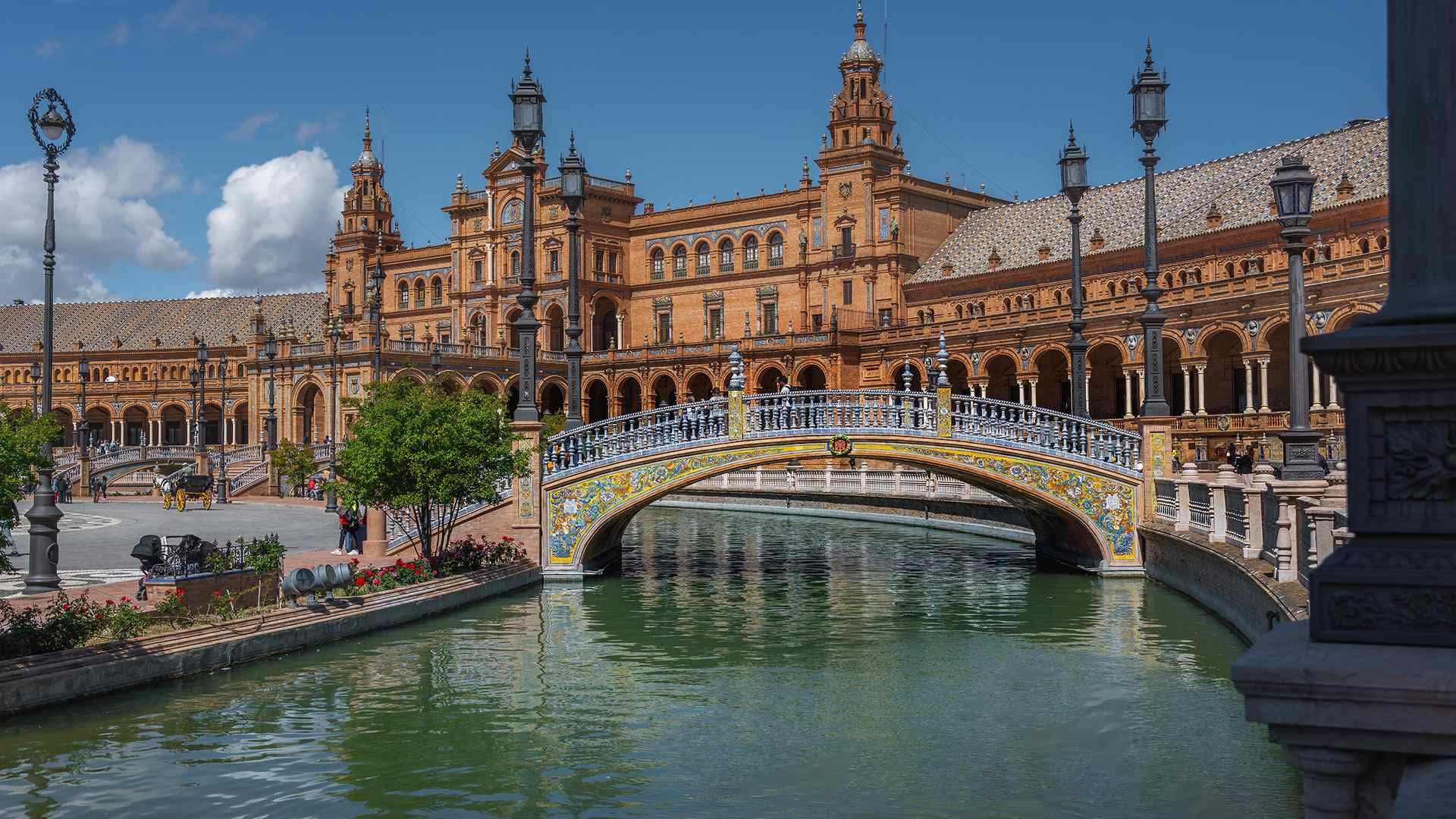
The Alcázar gardens in Seville in October in low golden light — the best time to visit Andalusia

The best time to visit Seville, Granada and Córdoba is October, or March through May — October gives you the same warmth without the festival crowds. Andalusia is the region where timing matters most in Spain, and where getting it wrong costs you the most.

Best months: March, April, May, October and November. In these months the afternoon is usable, the courtyards are open, the orange trees are in blossom or fruit, and walking between the Alcázar, the cathedral and the Barrio Santa Cruz is a pleasure rather than a route march between shaded points.

What to avoid: July and August. Seville and Córdoba regularly exceed 100°F, and the highest temperature ever officially recorded in mainland Spain — 117.7°F (47.6°C) — was measured at La Rambla in Córdoba province on 14 August 2021 (AEMET). Everything in this section that sounds appealing is still there in August, but you will experience it between eight and one and then again after dark.

The two events that reshape the calendar: Semana Santa, Holy Week, is the largest religious festival in Spain and is extraordinary in Seville and Málaga, with processions through the night. The Feria de Abril in Seville follows about two weeks later and is a week of dancing, horses and casetas. Both fill the city entirely and multiply accommodation rates, and both move with Easter, so confirm the year’s dates before you book anything.

Book the Alhambra before you book anything else. It operates strict timed entry with a daily cap and regularly sells out weeks ahead, particularly the Nasrid Palaces, which carry their own half-hour slot. Alhambra tickets should be bought directly from the official site (alhambra-patronato.es) the day your dates are fixed — this is the single most common booking mistake travelers make in Spain, and it is not recoverable on arrival. The best time to visit Granada for the Alhambra itself is October or April, when the gardens are working and the afternoon slots are bearable.

A May-only reason to add Córdoba. The Festival de los Patios runs across the first two weeks of May, when dozens of private courtyards open to the public, each one banked with geraniums and jasmine. UNESCO lists it as intangible cultural heritage. Córdoba is a small city and accommodation tightens during it, so book those nights at the same time as Seville rather than afterwards.

The coast alongside it: the best time to visit Málaga, Marbella and the Costa del Sol is May, June, September or October, and the Costa del Sol stays mild enough to be worth a winter week when the rest of the mainland is cold.

Suggested stay: six nights across Seville, Córdoba and Granada, all linked by high-speed rail.

Mallorca and the Balearics: A Season, Not a Year

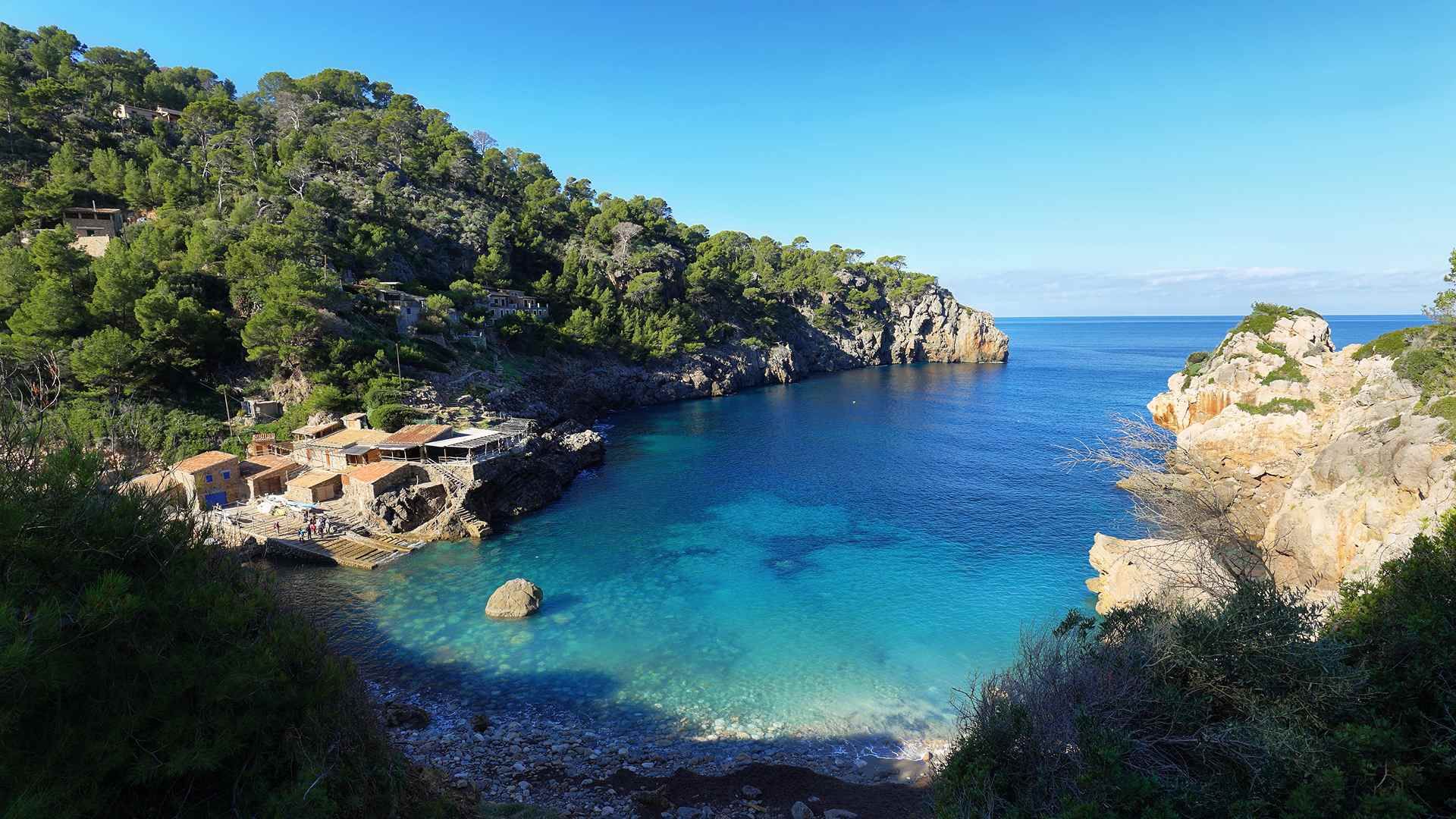
A cove on Mallorca’s north coast in September with the sea still warm

The best time to visit Mallorca and the Balearics is late May, June or September; the islands run a season from Easter to late October rather than a full year. Mallorca, Menorca and Ibiza run a season rather than a year. Most hotels and restaurants open around Easter and close in late October, and the character of the islands changes completely at each end.

Best months: late May, June and September. The Mediterranean here follows the same rule it does everywhere: it lags the air by about two months and reaches its warmest in late August and September, not July. September gives you the warmest water of the year with a fraction of the peak population. The same window is the best time to visit Ibiza, with the added consideration that the club season peaks in July and August.

What to avoid: late July and August, when the islands are at capacity, ferry and road traffic is heavy and rates are at their annual high.

An off-season reason to go: Mallorca from February to April is one of the best road cycling destinations in the world, and professional teams use it for pre-season training precisely because the weather is reliable, the climbs in the Serra de Tramuntana are excellent and the roads are empty. Hotels in Port de Pollença and Alcúdia open early for exactly this.

Suggested stay: five nights minimum. Mallorca in particular is far larger than visitors expect.

San Sebastián and Northern Spain: The Opposite Calendar

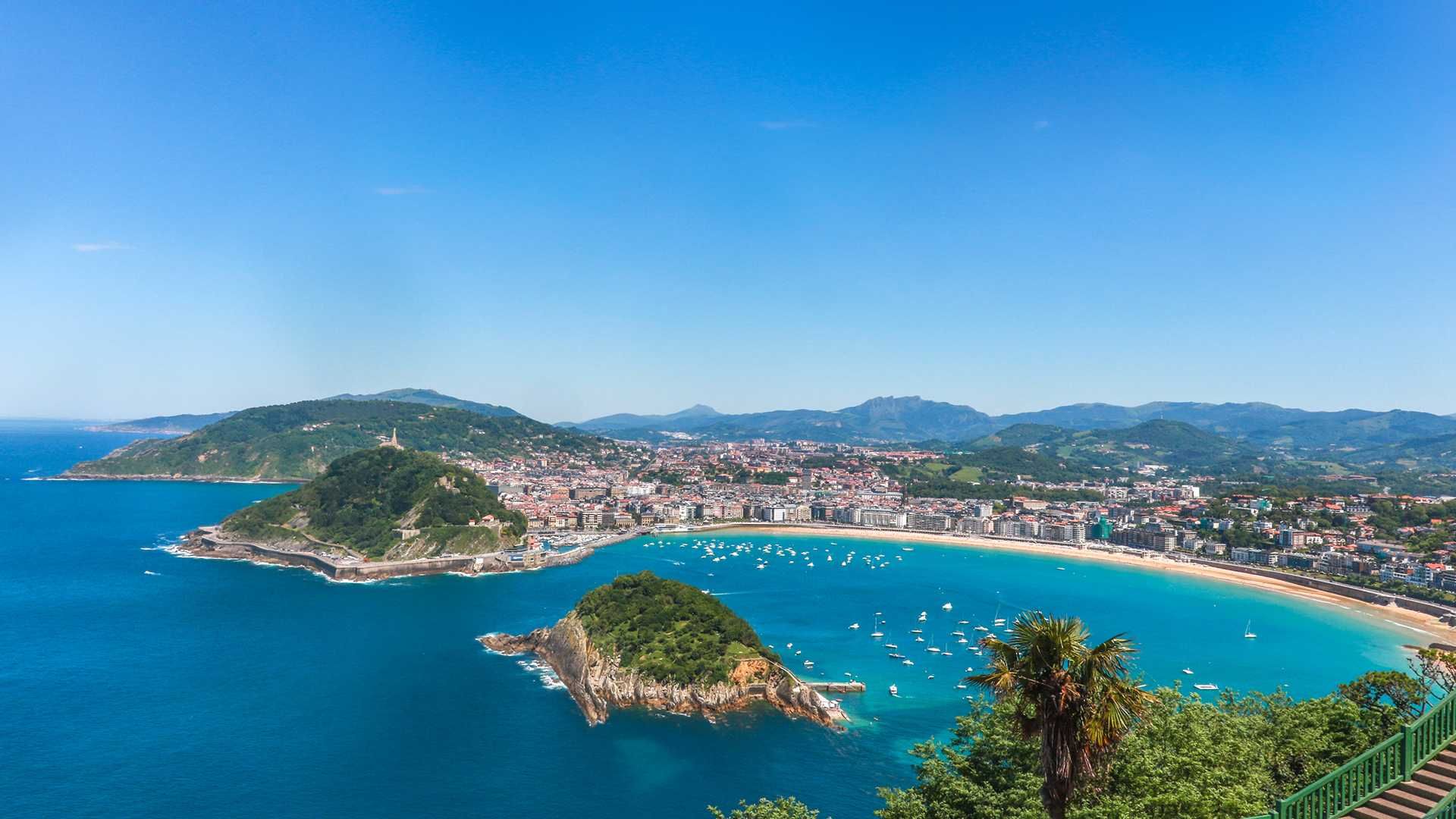
La Concha bay in San Sebastián on a clear July evening — northern Spain peaks in summer

The best time to visit northern Spain and San Sebastián is June through September — the exact months that make Andalusia difficult. Northern Spain is a different country climatically, and the mistake southern-focused travelers make is assuming the same calendar applies. The Basque coast, Cantabria, Asturias and Galicia are green because they are wet, and their best months are precisely the months the south is unbearable.

Best months: June through September. This is the one part of Spain where July and August genuinely work, with temperatures in the seventies, Atlantic beaches, and the highest concentration of serious restaurants in Europe. San Sebastián alone holds several three-star kitchens within a small city.

What to watch: the San Sebastián International Film Festival in late September fills the city, and the sirimiri, the fine persistent drizzle that defines Basque weather, can appear in any month. Pack for it rather than plan around it.

Elsewhere in the north: San Fermín in Pamplona runs from 6 to 14 July annually and is one of the most intense events in the Spanish calendar. The Camino de Santiago is at its best in May, June and September, and is hot and crowded on the meseta in high summer. Rioja’s harvest runs from September into October.

Suggested stay: four nights in San Sebastián, or a week for a coastal drive through to Santiago.

The Canary Islands: Spain’s Winter Destination

Mount Teide above the cloud line on Tenerife in winter

The best time to visit the Canary Islands is November to March, when the rest of Spain is cold and the islands hold daytime temperatures in the seventies. The Canaries invert the Spanish calendar entirely. Sitting off the coast of Africa, they hold daytime temperatures in the seventies almost year-round, and their high season is the northern European winter.

Best months: November to March, when the rest of Spain is cold and the islands are at their most useful. Also excellent in April, May and October, which give you the same weather with fewer visitors and lower rates. Canary Islands weather by month barely moves: the spread between the coldest and warmest month is about 10°F.

What to know: each island is genuinely different. Tenerife has Mount Teide, Spain’s highest peak and one of the best stargazing sites in the world, with an observatory to match. Lanzarote is volcanic and architecturally distinctive. Gran Canaria has the widest range of resorts, and La Palma and La Gomera are for people who want to hike.

What to avoid: the Christmas and New Year fortnight and February half-term, when northern European demand peaks and rates rise accordingly. Tenerife’s Carnival in February is among the largest in the world and worth planning for rather than around.

Getting there: the islands are reached via Madrid, with an onward flight of about two and a half hours. Seasonal nonstop service from the US has appeared on occasion, so it is worth asking rather than assuming.

Shoulder Season: Why April–June and October Beat Summer

Spain’s shoulder seasons are April into early June and mid-September into early November — the months when the full day is usable in every region at once. The Spanish shoulder season, April into early June and mid-September into early November, is unusually long and unusually good:

  • Usable hours: this is the core of it. In shoulder months the full day works in every region, including the south. In July and August the middle of the day is lost across most of the country
  • Weather: 73 to 84°F across the mainland, which is warm enough for the coast and comfortable for a full day of walking in the cities
  • Crowds: Spanish holidays concentrate in August, and European visitors in July and August. Move either side and the coast, the islands and the Andalusian cities all empty
  • Price: accommodation falls sharply outside the summer peak, and business class fares from the US sit below the transatlantic surge

Spain in May: The Month the Whole Country Works

A Córdoba patio in full bloom during the Festival de los Patios in May

May is the best month in Spain, and it is not close. Every region is at or near its best simultaneously, which is true of no other month. Andalusia is warm without being punishing, Madrid and Barcelona are in terrace season, the north is green and drying out, the Balearics have opened, and the sea is beginning to warm.

The one thing to watch is the Feria de Abril, which despite the name frequently falls in May and takes Seville with it. Check the year’s dates.

Spain in October: Andalusia’s Second Spring

October is the value answer, and in the south it is arguably better than May. Seville in October averages a high near 79°F, the summer crowds have gone entirely, the light is low and gold across the Alcázar and the Mezquita, and rates across Andalusia have dropped from their spring peak. Weather in Spain in October still reaches the high seventies in the south, and what to wear in Spain in October is summer clothing by day with a layer for the evening.

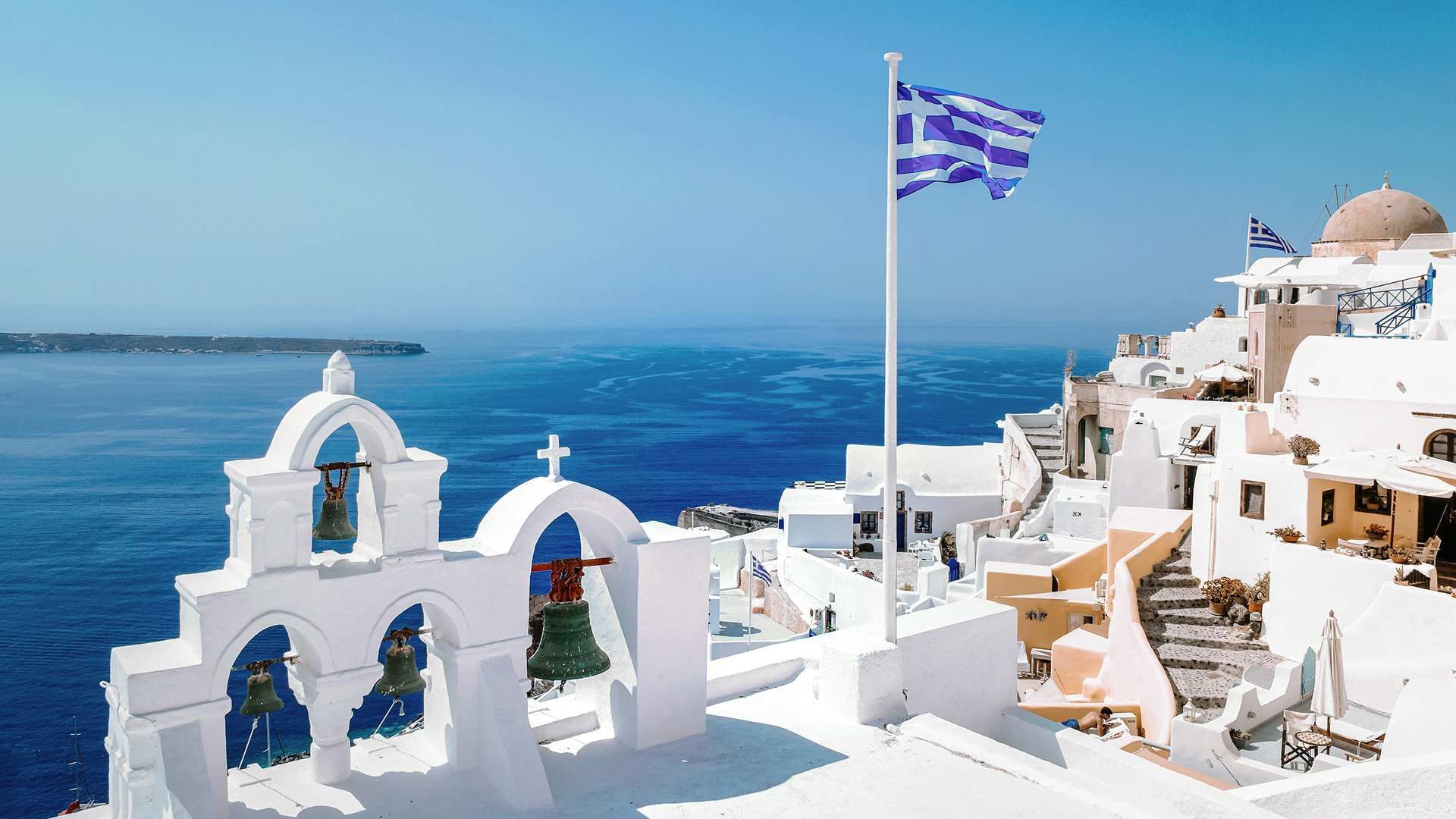
The trade-off is the north and the Balearics. Atlantic Spain turns wet in October, and the islands begin closing in the last week. October is a mainland and southern month, and an excellent one. The same shoulder-season logic runs across southern Europe — our guide to the best time to visit Greece shows how the eastern Mediterranean compares.

When to Book Business Class Flights to Spain from the USA

Business class to Spain should be booked 3 to 4 months ahead for May and early June, 4 to 5 months for the summer coast, and 60 to 90 days ahead for September and October. Timing the trip is half of it. Timing the booking is the other half. The fare bands are in the first table at the top of this guide; what changes below is when you need to act on them.

Travel Period Lead Time Book By What Drives It
March to April 60 to 90 days December to January Semana Santa and the Feria are the constraint, and both move with Easter
May to early June 3 to 4 months January to March Strongest demand of the year, because every region peaks at once
Late June to August 4 to 5 months February to March Peak on the coast and the islands; the inland cities stay softer
September to October 60 to 90 days June to August Fares near the annual floor with the best conditions in the south
November to February 30 to 60 days September to January Lowest fares of the year, with the Canary Islands the one exception

Spain has two long-haul gateways rather than one, which is worth using. Madrid-Barajas (MAD) is Iberia’s hub and has the deepest US nonstop network, while Barcelona-El Prat (BCN) has grown substantially and is the better arrival point for Catalonia, the Balearics and the eastern coast. Choosing the right one can remove a domestic connection entirely. The rules behind these booking windows are in our guide to when to book business class, and the fare mechanics in cheap business class flights to Europe.

Once you are in Spain, the high-speed rail network does more work than in most European countries. Madrid to Seville runs in about two and a half hours, Madrid to Barcelona in about two and a half, and Madrid to Málaga in under three. For most itineraries, flying into Madrid and taking the train south beats a connecting flight on both time and comfort.

Business Class to Spain: Airlines and Prices

Six carriers fly business class from the US to Spain, most of them nonstop to Madrid or Barcelona, with consolidator rates from $2,118 round-trip.

Airline Route Type US Gateways Business Class Product Consolidator Rate (RT)
Iberia Nonstop to MAD JFK, EWR, BOS, ORD, MIA, IAD, DFW, LAX, SFO Business (A350 with doors on newest aircraft) From $2,118
American Airlines Nonstop to MAD and BCN JFK, PHL, MIA, ORD, DFW, CLT Flagship Suite / Flagship Business From $2,118
Delta Nonstop to MAD and BCN JFK, ATL, BOS Delta One Suite (closing door) From $2,250
United Nonstop to MAD and BCN EWR, IAD, ORD, SFO Polaris From $2,200
Air Europa Nonstop to MAD JFK, MIA, ORD, BOS Business (787 flat bed) From $2,118
Lufthansa / Air France / British Airways Via European hub Most major US cities Varies by carrier From $2,150

Rates as of September 2026, round-trip, business class, per person. Route maps change seasonally, so confirm service on your dates.

Two notes worth having before you choose. Iberia and American are joint venture partners on the Atlantic, which means their Madrid schedules are coordinated rather than competing, and availability on one often reflects the other. And for anywhere south of Madrid, flying into Madrid and taking the AVE is usually faster door to door than connecting onward by air, once you count the second security queue and the transfer at each end. For Catalonia and the eastern coast, arriving straight into Barcelona removes the connection altogether.

For how the European carriers compare cabin by cabin, see best business class airlines to Europe; the two hub alternatives to a Spanish nonstop are covered in our Lufthansa business class review and KLM business class review.

The wider trade-off is the same one that applies across Europe. A nonstop is normally both the fastest and the most competitively priced option on the Madrid and Barcelona routes, so the reason to consider a connection is a particular seat you want. Which applies is the first thing we ask about on a quote.

What We Recommend for US Travelers

An AVE high-speed train at Madrid Atocha station

For a first trip to Spain, May is the strongest month; for Andalusia specifically, October.

For first-time visitors: May. It is the only month when every part of Spain is close to its best at the same time, and it is the month that makes the strongest case for the country. Madrid, Seville and Barcelona by high-speed train over ten days is the shape that works, and all three are comfortable in May.

For Andalusia specifically: October. Seville, Córdoba and Granada in October give you the full day back, low golden light, no summer crowds and lower rates than the spring festival season. If Andalusia is the reason for the trip, this is the month.

For the beach and the islands: September. The Mediterranean is at its warmest of the year, the August crowds have gone, and the Balearics are still fully open until the last week of October.

For a winter trip: the Canary Islands, or Madrid. The Canaries hold seventies temperatures through the northern winter, and Madrid delivers clear cold days, an exceptional food scene and the lowest business class fares to Spain of the year.

For Spain and Portugal in one trip: April, May or October. Lisbon and Porto follow the Andalusian calendar closely, and the Madrid–Lisbon and Seville–Lisbon legs are short enough that the two countries share a season.

For business travel: September through November and February through June. August is effectively closed across the country, and the Madrid trade fair calendar can absorb the city’s hotel supply on short notice. A Thursday and Friday of meetings in Madrid extends easily into Seville, Toledo or Bilbao for the weekend, all reachable by train.

Spain does not have one best season. It has a country that gives you the whole day for about eight months of the year and takes the middle of it away for the other four. Work out whether you are coming for the cities, the coast, the north or the islands, and let that choose the month. Then sort the flights early, because the shoulder weeks are exactly when everyone else who has worked this out is booking too.

For current rates and availability on your specific dates, see business class flights to Spain or get a free quote from Flyer Club. We will confirm the specific airline, aircraft, and consolidator rate on your route. Get a Free Quote →

Frequently Asked Questions

What is the best time to visit Spain?

April to early June and mid-September to early November. These months give you comfortable temperatures across the whole country, a usable full day even in the south, and crowd levels below the July and August peak. May is the single strongest month, and October is the best value.

How hot does southern Spain actually get in summer?

Seville averages a high near 97°F in July and August, and both Seville and Córdoba pass 100°F regularly. The highest temperature ever officially recorded in mainland Spain, 117.7°F (47.6°C), was measured at La Rambla in Córdoba province in August 2021 (AEMET). This is why the Spanish day splits in summer: the practical hours are roughly eight until one, and then eight in the evening until midnight.

What is the best month to visit Seville and Andalusia?

October, or April and May. October gives you highs near 79°F, the whole day usable, no summer crowds, and lower rates than the spring festival season. April and May are also excellent but coincide with Semana Santa and the Feria de Abril, which fill Seville entirely.

When is Semana Santa in Spain?

Holy Week, which moves with Easter and therefore changes every year. It is the largest religious festival in the country, and the processions in Seville and Málaga run through the night. Accommodation books months ahead and rates rise sharply, so confirm the year’s dates before planning anything else around them.

What is the best time to visit Barcelona?

May, June, September or October. The city is walkable year-round and the sea is swimmable from June into October, so the shoulder months give you the best combination of weather and manageable crowds. July and August are the peak, and the city has been actively managing visitor pressure, so check current accommodation rules and tourist taxes when you book.

How many days do you need in Barcelona?

Three nights is the practical minimum: one for the Gaudí sites, one for the Gothic Quarter and the waterfront, and one that absorbs whatever you underestimated. Four nights lets you add Montserrat or Girona without cutting the city short. Book Sagrada Família timed entry before you book anything else.

When is the best time to visit northern Spain and San Sebastián?

June through September, which is the opposite of the advice for the south. The Basque coast, Asturias and Galicia are cooler and wetter than the rest of the country, and their best weather falls in the months when Andalusia is at its most difficult. Late September brings the San Sebastián Film Festival, which fills the city.

Are the Canary Islands a winter destination?

Yes, and their high season is the northern European winter. Daytime temperatures hold in the seventies for most of the year, so November through March is when the islands are most useful and most expensive. April, May and October give you similar weather with fewer visitors and lower rates.

What is the best time to visit Mallorca and the Balearics?

Late May, June and September. Most hotels and restaurants run from around Easter to late October, and the sea is at its warmest in late August and September rather than in July. February to April is also worth knowing about for road cycling, when professional teams train on Mallorca and the roads are empty.

Is Mallorca worth visiting if you have already seen the Spanish mainland?

Yes, and it is a different trip rather than more of the same. The Serra de Tramuntana, the north coast coves and the Palma food scene have little in common with Andalusia or Madrid. Five nights is the minimum that makes the island make sense; anything shorter turns into a beach transfer.

What is the best time to visit Málaga and the Costa del Sol?

May, June, September and October, with the sea warmest in September. The Costa del Sol also holds up better in winter than anywhere else on the mainland, with mild days in December and January, which is why it fills with long-stay northern European visitors rather than emptying.

What is the best time to visit Valencia?

April, May, September and October, with one date to plan around: Las Fallas in the first half of March fills the city entirely and is worth seeing deliberately rather than stumbling into. The beaches work from June to October and the summer heat is more manageable than inland Andalusia.

Do I need to book the Alhambra in advance?

Yes, and earlier than you expect. The Alhambra operates a daily visitor cap with timed entry, and the Nasrid Palaces have their own half-hour slot that sells out weeks ahead in every season except deep winter. Buy directly from the official site as soon as your dates are confirmed. This is the most common booking mistake travelers make in Spain.

How much does business class to Spain cost from the USA?

Roughly $2,118 to $3,800 round-trip through consolidator access, depending on season and gateway. The lowest fares fall between November and February, the highest in late June through August, and the September to October window sits close to the annual floor while Andalusia is at its best. Spain has two long-haul gateways, Madrid and Barcelona, with nonstop service from a wide range of US cities and several carriers competing on the main routes. Published fares typically run well above the consolidator rate on the same flights.

Do I need a visa for Spain as a US citizen?

No. US citizens can visit Spain and the wider Schengen Area for up to 90 days in any 180-day period without a visa. Two border changes are worth noting. The EU’s Entry/Exit System (EES) has been fully operational since 10 April 2026: passport stamps are replaced with a digital record, and your fingerprints, facial image and passport data are registered on arrival (European Commission). Separately, the EU’s ETIAS pre-authorization — which is not a visa — is expected in the last quarter of 2026 at a fee of €20, with a six-month transitional period during which travel without it is still allowed. Confirm current requirements before booking.

When should I avoid visiting Spain?

July and August for the inland and southern cities, where afternoon temperatures in Seville and Córdoba regularly exceed 100°F and the middle of the day becomes unusable. August is also when Spain takes its own holidays, so Madrid and Barcelona lose a share of their independent restaurants while the coast and the islands run at capacity.